



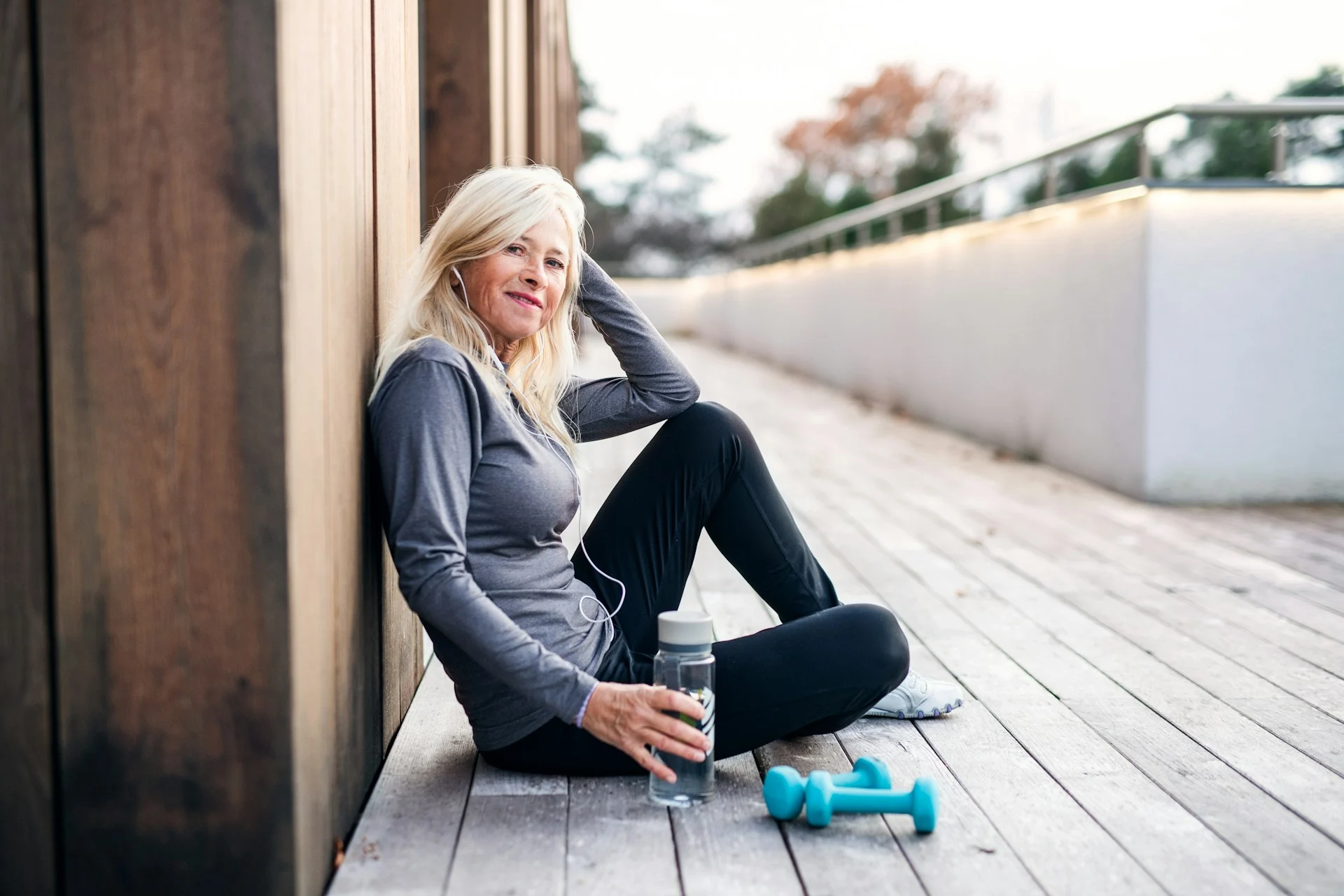
There’s a version of fitness that burns itself out. You’ve seen it. The January gym crowd. The person who loses 15kg before a wedding and finds 20 again after it. The five-week streak that collapses the moment life gets complicated. And then there’s a different version. The 68-year-old who walks three kilometres every morning not because a doctor told them to, but because the walk is when they think. The 72-year-old who swims laps before anyone else is awake, not to maintain a certain weight, but because getting in the water is simply part of who they are.
The difference between those two people isn’t discipline. It isn’t metabolism. It isn’t even, as the research increasingly shows, genetics. It’s something quieter and harder to put your finger on: the reason they move.
The Genetics Story We Keep Getting Wrong
When we see someone who ages visibly well, the instinct is to attribute it to luck. Good genes. An efficient metabolism. Something we can’t replicate and probably don’t have.
That instinct is mostly wrong.
Research published in Immunity and Ageing found that roughly 25 percent of the variation in human longevity is attributable to genetic factors. Which means the other 75 percent is shaped by the choices a person makes across their life: what they eat, whether they move, how they manage stress, what they prioritize. The Mayo Clinic’s own geriatric researchers have put the genetic contribution even lower, estimating that genes account for no more than around 20 percent of longevity, with the remaining 80 percent determined by lifestyle factors. “The contribution of genetics,” as one Mayo Clinic physician put it, “is much lower than some would think.”
This is the part most people skip over. Because it’s far easier to believe your health is out of your hands than to sit with the more confronting truth: that the gap between how you age and how you could age is, for most people, largely behavioral. And the most important behavior isn’t the exercise itself. It’s the psychology underneath it.
Why “Wanting to Look Better” Is a Terrible Long-Term Strategy
Most people who start exercising are motivated by appearance. This isn’t a criticism. It’s just an accurate description of what fitness culture sells and what most of us buy. The before-and-after. The weight loss. The visible arms by summer.
The problem isn’t the goal. The problem is the shelf life of that kind of motivation.
A systematic review of the research on exercise and self-determination theory, published in the International Journal of Behavioral Nutrition and Physical Activity, found a clear pattern across dozens of studies: intrinsic motivation, meaning the kind that comes from genuine enjoyment, personal meaning, and a sense that movement reflects who you are, is a substantially stronger predictor of long-term exercise adherence than extrinsic motivation like appearance goals or social pressure. Appearance-based motivation tends to get people started. It almost never keeps them going.
And the mathematics here matter enormously. The person who exercises consistently for 35 years because they genuinely like how it makes them feel is going to arrive at 70 in a categorically different physical state than the person who did aggressive boot camps in their 30s and 40s, burned out, stopped, and restarted the cycle four more times. Not because one person has more willpower. Because they were playing different games from the beginning.
The research on intrinsic motivation also found something worth pausing on: when people exercise primarily through what psychologists call “introjected” motivation, meaning guilt, shame, or external pressure, the exercise itself often comes at a cost to psychological health. You can maintain a body and erode a person simultaneously. The people who stay fit into their late decades tend not to be doing that. They’ve found something that doesn’t feel like punishment.
The Quiet Shift
At some point, the people who stay moving into their 60s and 70s stopped exercising for the mirror. Most of them can’t even tell you exactly when it happened.
They just noticed that a walk in the morning made the rest of the day better. That the mornings they skipped it, they were shorter with people they loved. That the swim or the yoga class or the bike ride was the part of the week where they felt most like themselves, not most like someone trying to become someone else.
This shift, from body-as-project to movement-as-identity, is what the research on long-term exercise adherence keeps pointing toward. The people who sustain it aren’t more disciplined. They’ve simply reclassified what moving their body means. It stopped being a means to an end and became part of the end itself.
What Staying in the Game Actually Looks Like
Research looking at physical activity in women over 60 found that regular, mild physical exercise promoted greater autonomy and functional ability in daily life, supported independence, and reinforced social connection. Not a dramatic result. Not a six-pack-at-65 story. Just the ability to keep doing the things that make a life feel worth living: moving without assistance, staying socially connected, waking up in a body that works.
That framing matters. Because when the goal is functional independence rather than aesthetic achievement, something changes about the relationship to effort. Functional independence is intrinsically motivating in a way that a dress size simply isn’t. The older you get, the more the stakes shift from looking a certain way to being able to carry your groceries, play with your grandchildren, take stairs without thinking about it, travel without a mobility plan.
The people who saw that shift coming, and started moving their body accordingly, are the ones who show up in their 70s still moving.
It Was Never About the Discipline
The story we tell about fit older people almost always centres on discipline and sacrifice. The 5am alarms. The passing on dessert. The iron will.
That story isn’t wrong exactly. But it’s incomplete in a way that makes the goal feel less achievable than it actually is.
Because discipline, for most people, is not a renewable resource. It depletes. It wavers. It doesn’t survive grief or illness or the accumulated exhaustion of a complicated life. What survives those things is meaning. What survives is the quiet, internal sense that moving your body is part of staying inside a life you don’t want to start opting out of.
The 68-year-old on the morning walk isn’t out there grinding. They made a decision somewhere in their 40s or 50s that their body was for living in, not just for looking at, and they organized their relationship to movement around that decision. Everything that came after got easier not because they got more disciplined, but because they stopped fighting the thing they were actually doing.
That’s the pattern. And it’s available to almost everyone. The genetics, it turns out, are mostly beside the point.