




True Anomaly, the defense space startup founded in 2022, has closed a $650 million Series D funding round that values the company at $2.2 billion. The financing arrives the same week the company was named one of 12 contractors selected to develop space-based interceptors for the Pentagon’s Golden Dome missile defense program.
The round was co-led by Eclipse and Riot Ventures and includes $50 million in debt from Stifel Bank. Total capital raised by the company since its founding now stands at roughly $1 billion.
That is a remarkable trajectory for a company most of the public had never heard of two years ago. It is also a useful window into how venture capital, military doctrine, and orbital engineering are converging into something the U.S. defense establishment now openly calls a war-fighting domain.
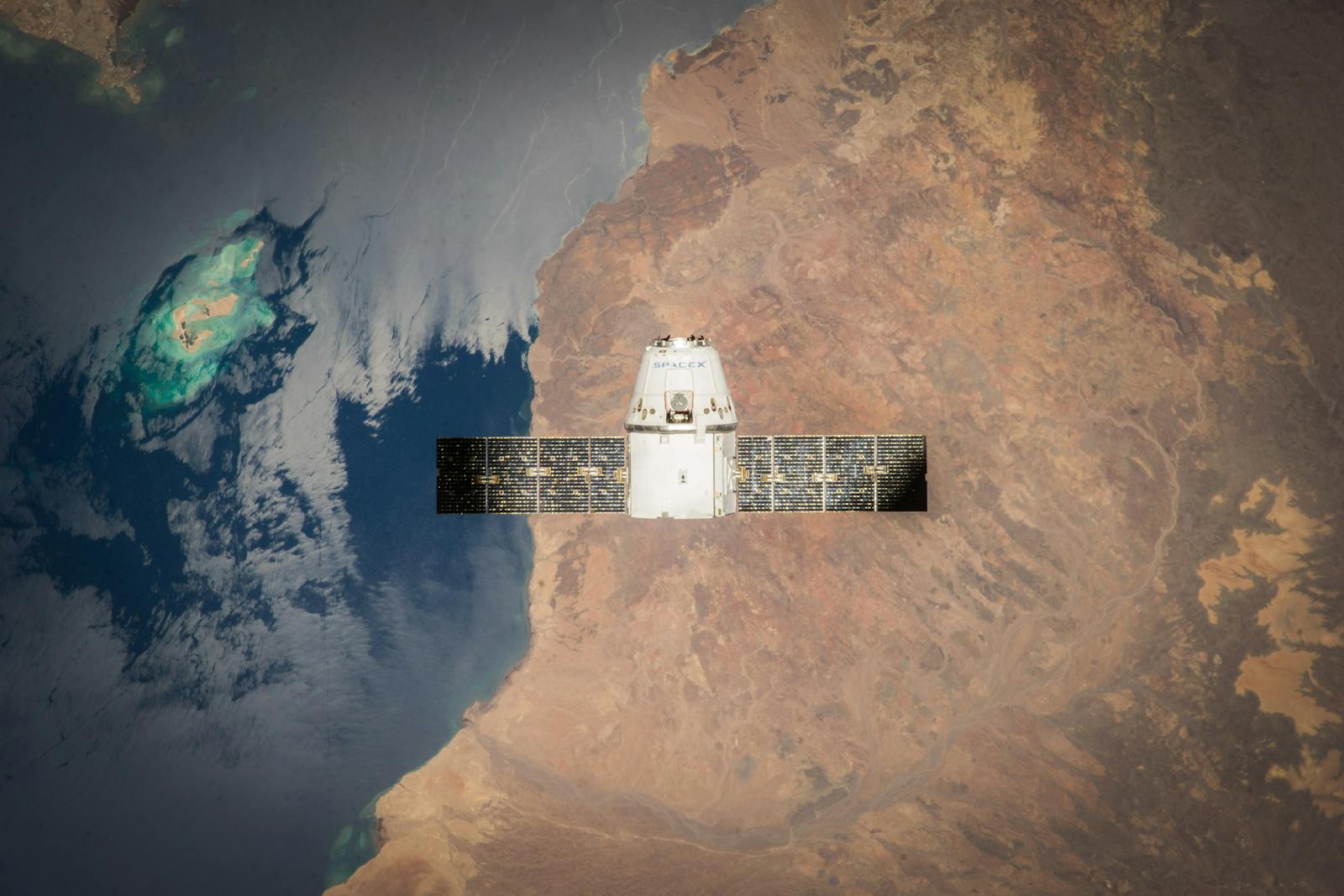
What True Anomaly actually builds
The company’s flagship product is the Jackal, a maneuverable spacecraft designed for rendezvous and proximity operations near other satellites. Pair that hardware with the company’s Mosaic mission software platform, and you have the basic toolkit for what the Pentagon calls space domain awareness — knowing what is in orbit, what it is doing, and being able to put your own asset close enough to do something about it.
The company says the new capital will push manufacturing capacity at its Denver facility to as many as 50 Jackal spacecraft per year. Headcount is projected to grow from roughly 300 employees today to 500 by year-end, after doubling from about 150 the previous year.
Co-founder and CEO Evan Rogers has said the company has built new hardware and software specifically tailored to space-based interceptors, the orbital weapons at the heart of Golden Dome’s most ambitious layer.
The Golden Dome contract that triggered the raise
The Space Force’s Space Systems Command issued 20 individual awards to 12 companies in late 2025 and early 2026 under Other Transaction Authority agreements, with a combined ceiling of up to $3.2 billion. The contractor list reads like a deliberate mix of legacy primes and newer full-stack developers: Lockheed Martin, Northrop Grumman, Raytheon, General Dynamics Mission Systems, and SpaceX alongside Anduril, True Anomaly, Turion Space, GITAI USA, Booz Allen Hamilton, Quindar, and SciTec.
These are early-stage prototyping awards, not production contracts. The full price tag for an operational space-based interceptor layer would be vastly larger, which is part of why the program remains politically contested.
For investors, though, prototyping money is the signal that matters. It is the difference between a defense startup with a pitch deck and a defense startup with a Pentagon line item.
Why the valuation works on paper
$2.2 billion for a company that has yet to operate at scale sounds aggressive. The logic gets less aggressive when you look at the demand picture the Space Force is sketching.
The service is shifting its doctrine toward treating satellites as replaceable, surge-producible assets rather than scarce, long-lived platforms. That doctrinal change implies a sustained appetite for spacecraft that can be built quickly, in volume, and operated in contested orbits. True Anomaly’s pitch — 50 Jackals a year, software-defined missions, a workforce doubling annually — is calibrated to that exact demand curve.
The Space Force separately picked 14 companies to compete for contracts to develop satellites that monitor activity in geostationary orbit, roughly 22,000 miles above Earth, where adversary spacecraft have been demonstrating increasingly aggressive maneuvers. The pattern is consistent: more vendors, more prototypes, more parallel bets.
The bottleneck nobody mentions in the press release
There is a reason to read the True Anomaly news alongside a quieter story that has been emerging for months. The Pentagon’s grand plans for proliferated, attritable, surge-produced satellite fleets keep colliding with a supply base that was never built for that tempo.
Inside the Space Development Agency’s Proliferated Warfighter Space Architecture — a roughly $35 billion program through fiscal 2029 — even the satellite buses that were supposed to be commodity items have failed inspections in significant numbers. Acting SDA director GP Sandhoo said at the SmallSat Symposium that every bus in the first Tranche 0 deployment in 2024 had problems with guidance, navigation, control, or thermal systems.
The deeper bottlenecks sit further down the supplier tree: optical inter-satellite communications terminals, infrared sensor arrays, radiation-hardened microelectronics, high-precision valves, encryption devices, and solid rocket motor components. Industry observers have noted that the parts of the industrial base most starved for private capital are usually not the ones getting the press coverage.
True Anomaly’s $650 million does not directly fix any of that. It funds a spacecraft prime, not the suppliers a spacecraft prime depends on.
The institutional logic of betting on newcomers
The Golden Dome contractor list is a deliberate institutional choice. The Space Force could have funneled prototyping dollars to the three or four primes that have built every previous generation of national security satellite. Instead it spread 20 awards across 12 companies, half of them startups or non-traditional entrants.
That reflects a particular theory of how to develop hard technology under uncertainty. Cast a wide net. Fund parallel approaches. Let the prototypes prove themselves in low Earth orbit before committing to a production architecture. Other Transaction Authority is the legal mechanism that makes this possible, and it has become the default tool for any space program where speed matters more than procurement orthodoxy.
The bet on companies like True Anomaly is partly technical and partly cultural. The Pentagon wants suppliers who think in software release cycles, not five-year acquisition timelines. Whether that culture survives contact with classified program management, export controls, and the realities of building spacecraft that have to actually work in orbit is the open question.
What to watch next
The Series D buys True Anomaly time and capacity. It does not buy the company a finished interceptor, an on-orbit demonstration, or a production contract. Those milestones come next, and they come in an environment where Golden Dome’s cost estimates keep climbing and allied governments remain wary of the program’s strategic logic.
For readers tracking how commercial space and national security are merging, True Anomaly is a useful case study in real time. The broader context includes the Space Force’s evolving combat-ready orbital doctrine and the growing pivot of small-satellite companies toward Pentagon work, both of which sit upstream of the True Anomaly story.
The valuation will be vindicated or punctured by the same thing that vindicates or punctures any defense startup: whether the hardware works on the day someone needs it to. Until then, $2.2 billion is a statement about what investors believe the U.S. government will pay for over the next decade. It is a confident statement. The orbital and industrial realities behind it are still being assembled.
Photo by Zelch Csaba on Pexels