



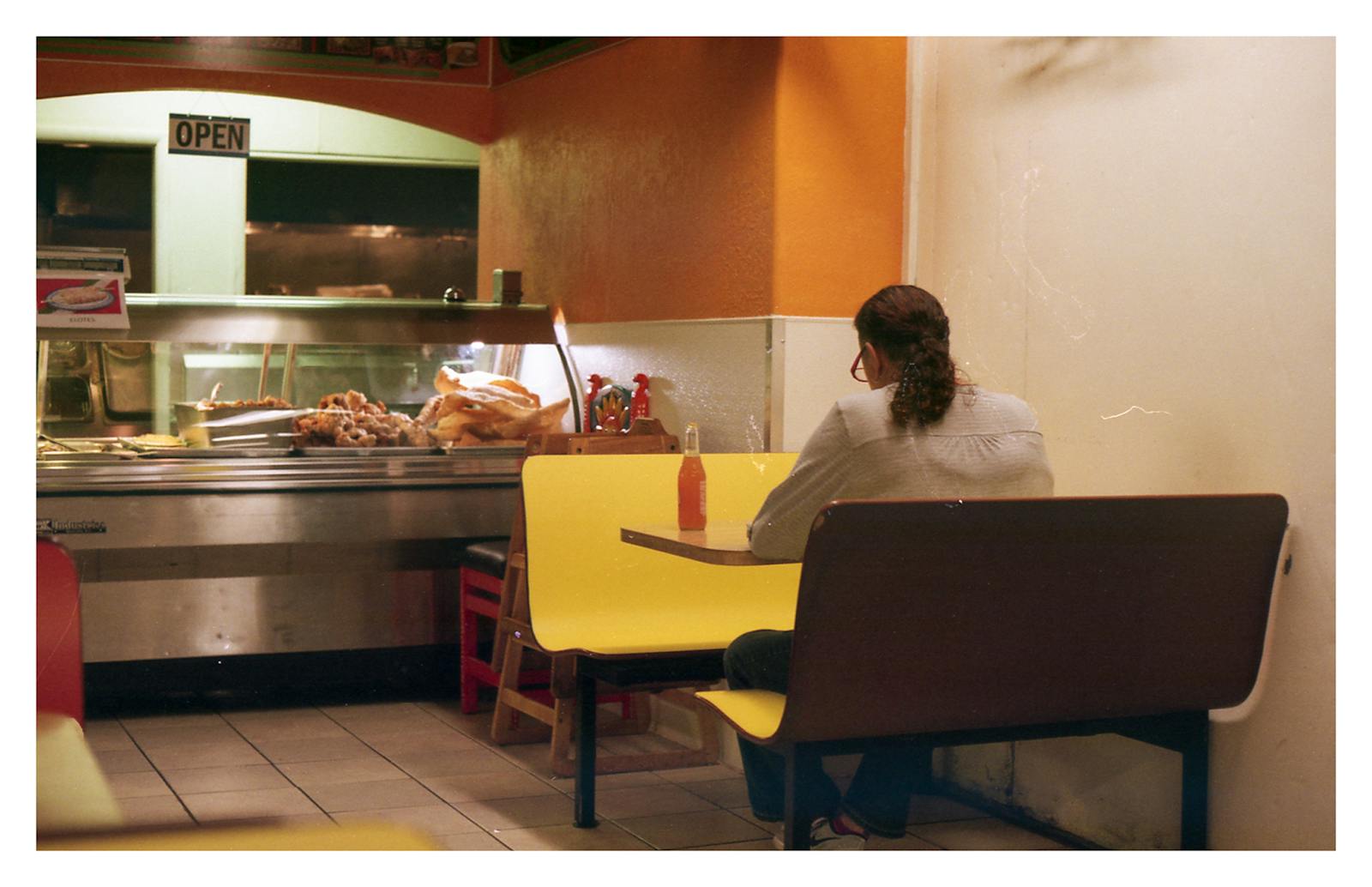
The corner table is not a hiding place. It is a watchtower. The adult who walks into a restaurant and instinctively scans for the seat with the back wall behind it and the room laid out in front is doing something far more specific than avoiding people, they are running a security check that started decades before the menu arrived.
Watch closely the next time you eat with someone who does this. They will pause at the host stand, glance across the room, and quietly steer toward the booth in the corner. If forced into the center of the floor, they will angle their chair. They will face the door. They look relaxed once seated, and they are, but only because they have just solved a problem most diners do not know exists.
The corner is not about people, it is about information
Antisocial people avoid restaurants. They eat at home. The corner-seat adult, by contrast, often loves company, loves conversation, loves a long dinner. What they cannot tolerate is sitting with their back exposed to a room they have not yet read.
This is the giveaway. The behavior is not about reducing social contact. It is about controlling sightlines.
That distinction matters because it points away from personality and toward something learned. Children who grew up in unpredictable homes developed a habit of mapping environments before settling into them. The corner seat is the adult version of a survival skill that once had a real job.
What hypervigilance actually looks like at dinner
The underlying pattern is hypervigilance, a heightened scanning of the environment for threat cues. It is one of the more durable residues of early stress, and trauma survivors who have written about their experiences describe it candidly as both a gift and a curse, an unnatural ability to read body language and mood that came from years of needing to.
That description fits the corner-seat adult almost exactly. They will tell you who in the restaurant is about to leave, which couple is having a fight two tables over, and whether the server is having a bad shift. They are not nosy. They are simply still scanning.
The cost of that scanning, when the back is exposed, is a low hum of unease that ruins the meal. The corner solves the problem in one move. Wall behind, room ahead, exits visible. The nervous system can finally stand down.
Where the habit usually starts
The childhood version of this behavior tends to look like a kid who walks into a new classroom and quietly chooses the desk that lets them see the door. Or the child at a family gathering who sits on the staircase rather than in the living room. Or the kid who, at a friend’s house, takes a long time to relax because they are still learning the household’s weather.
That early radar gets installed quietly. Children who grew up reading adult moods through small environmental cues often carry that pattern-detection forward as their default operating system. The corner-seat habit is a spatial version of the same thing.
Restaurants are unpredictable rooms full of strangers, sudden noises, dropped glassware, raised voices, and unfamiliar service patterns. To a calm nervous system this is background. To a system trained early to track the weather of a room, it is a lot of incoming data.
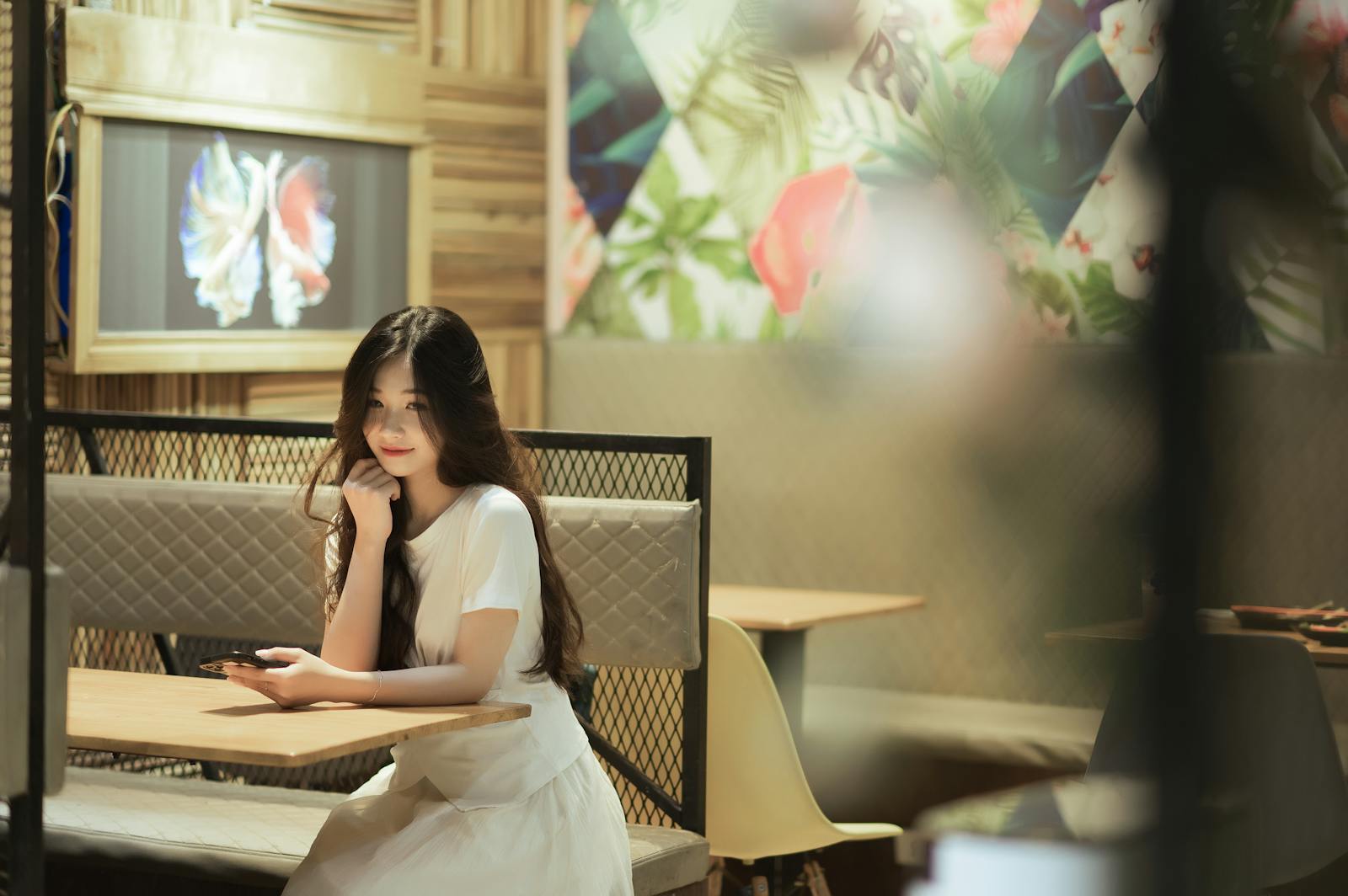
The research on seat selection is more interesting than it sounds
People do not just sit anywhere. They sit where their preferred level of social exposure is available.
Spatial choice is rarely just aesthetic. It is a quiet negotiation between a person’s nervous system and a room’s geometry.
The corner seat follows this logic. Same instinct, different room.
Why introversion is the wrong explanation
It is tempting to blame introversion, but it does not hold up. Plenty of extroverts choose corner seats. They are loud, social, the life of the dinner, and yet they will quietly steer the group toward the booth against the wall. The introvert-extrovert axis is about energy and stimulation. The corner-seat behavior is about safety and predictability.
A useful comparison: research on cat people and dog people has found that personality traits cluster in distinct ways. The same logic applies here. Corner-seat adults are not less social, they are simply more sensitive to ambient unpredictability and have learned a small architectural trick that lets them participate fully without paying a tax for it.
This is why the behavior often confuses partners. One person sits down anywhere and starts talking. The other reorients the table, switches chairs, and only then becomes warm and present. The first person reads this as a quirk. It is actually a prerequisite.
The link to other small environmental rituals
Corner-seat preference rarely shows up alone. It tends to come bundled with a constellation of small environmental controls that look unrelated until you understand the underlying logic.
The same person who needs to see the room often also keeps the front door locked the moment they walk in, knows where the exits are in any building, and feels uneasy in basements or windowless rooms. The same logic appears in other contexts: a small, controllable zone of order inside a larger uncontrollable environment is a way of borrowing calm.
The corner table is that drawer, scaled up to a restaurant.
The body keeps a map
What is striking about these patterns is how physical they are. The body learns the map before the mind has language for it. Adults who grew up monitoring caregivers often develop an uncanny ability to sense external emotional shifts while losing track of their own internal state. The corner seat is part of the same pattern. The room is read so closely that the self temporarily disappears into the scanning.
This is also why the relief, when the right seat is secured, is so disproportionate. It is not preference being satisfied. It is a body finally allowed to rest.
Therapists who work with adults from unpredictable households describe this as the slow process of teaching the nervous system that the present is not the past. Childhood patterns can show up in adult life in ways people do not always connect, including spatial habits that look like quirks but are really old defenses still doing their job.
What this looks like in a marriage
I have watched this play out at my own dinner table, and at restaurant tables with friends. One person walks in and is fully present from the moment they sit. The other needs a minute. They are not being rude. They are completing a task you cannot see.
My wife pointed this out to me about myself years ago. She said I become a different person once I have the right seat, and she was right. Until the room is mapped, part of my attention is elsewhere. Once it is mapped, I am there.
Naming this in a relationship matters. It turns a small recurring tension into a shared piece of information. The partner who does not need the corner stops taking it personally. The partner who does stops apologizing for it. The negotiation becomes practical instead of emotional.
Why this matters for kids
Parents who notice their own corner-seat instinct often start watching for it in their kids. My seven-year-old has a clear preference for sitting where she can see the room. I do not push her out of it, but I also do not want her to need it the way I have needed it. The difference between a preference and a requirement is whether the body relaxes elsewhere too.
In Raised By Wounds, author JK Hogan describes how children develop survival behaviors in environments where emotional safety is uncertain, and how those behaviors persist long after the original threat is gone. The corner seat fits that description neatly. It made sense once. It still makes sense sometimes. It does not have to be the only option.
The goal with kids is not to engineer environments so controlled that they never need to scan. It is to make scanning unnecessary often enough that the nervous system learns ease as a baseline. Predictable mealtimes. Calm voices. Clear weather inside the house. The radar dims when it is not needed.
The honest reframe
Adults who choose the corner are not weird. They are not difficult. They are not antisocial. They are running an old program that was once load-bearing. The program got installed early, and it got installed because something in the early environment required it.
The healthier version of this awareness is not to fight the preference. It is to know what it is. To say, out loud if necessary, that you would prefer the booth in the corner, and then to enjoy the meal completely once you have it. The behavior is only a problem when it is unconscious and apologetic. Once it is named, it becomes what it always was, a small piece of architecture that lets a particular nervous system show up fully for the people across the table.
Most of the corner-seat adults I know are warm, observant, and generous. They notice everything. They are often the first to ask how you are really doing. They have spent a lifetime reading rooms, which means they have spent a lifetime reading people. The corner is not where they hide from connection. It is where they finally stop working long enough to have it.
Give them the seat. They will be better company for it.
Photo by Brett Sayles on Pexels