




Some people cannot receive a kindness without flinching.
I notice it in my own industry constantly. A founder gets an introduction from a mentor — a warm email to an investor, no strings attached — and within forty-eight hours they’re scrambling to find a way to repay it. They offer to advise the mentor’s portfolio companies. They send an expensive bottle of something. They promise referrals they can’t actually deliver. The mentor, who simply wanted to help, ends up vaguely uncomfortable.
I’ve watched this happen often enough, in enough contexts, that I’ve come to think of it as a tell. What looks like generosity is often something quieter. It’s a person trying to close an open loop in their nervous system before it stays open long enough to hurt them.
The math that started in childhood
Children don’t arrive in the world keeping score. They learn to. The accounting begins in homes where affection had visible terms — where a hug came after a good report card, where warmth followed compliance, where parental attention tightened or loosened depending on how useful, quiet, or impressive the child had managed to be that week.
I grew up in a household where my parents ran a small dry cleaning business in Seattle, and I learned early how to read a ledger. Not just the business kind. The relational kind. Most kids in entrepreneurial families do. You absorb the math of inputs and outputs before you can articulate it. The child learns, before they have language for it, that some forms of love come with terms attached. Affection in. Performance out. Account squared.
By the time they’re adults, the math is automatic. They don’t even feel themselves doing it.
What “I don’t want to be a burden” actually means
Listen to how compulsive reciprocators talk about themselves. They use the word ‘burden’ constantly and express reluctance to impose on others. They apologize for asking questions. They preface requests with elaborate disclaimers. When they finally accept help, they often follow it with a strange, urgent restlessness — a need to do something, immediately, that resets the ledger.
The official story they tell themselves is that they’re considerate. They don’t want to take advantage. They were raised to be polite. The truer story is that being on the receiving end of unreciprocated care feels physically dangerous to them, because somewhere in their early life, it was.
If kindness was always followed by an extracted price — guilt, obligation, leverage held over their head later — then accepting help without immediately neutralizing it isn’t generosity to them. It’s exposure.
The pattern lines up with the research
Writers who cover this territory more deeply than I do point to something psychologists call insecure attachment. The framework, as I understand it from reading the analyses, measures relational behavior along two dimensions. Anxiety, which is how confident you are that the people close to you will be available. Avoidance, which is how comfortable you feel depending on them at all.
The compulsive reciprocator usually scores high on avoidance — uncomfortable trusting that anyone can be counted on without strings. So they cut the strings themselves. Preemptively. Before anyone else can pull them.
I’m not a psychologist, and I won’t pretend to be. But the pattern is so consistent across the contexts I do know — startup ecosystems, journalism networks, the relationships that form between operators and the people who back them — that I’ve stopped being surprised by it. Once you start watching for it, you see it everywhere capital, favors, or care change hands.
The performance disguised as gratitude
There’s a particular kind of overachiever who treats every relationship the way they treat their job. They produce. They deliver. They make sure their value is constantly visible. Many of these adults learned in childhood that love was conditional on performance — that being loved required being impressive, useful, or extraordinary in some demonstrable way.
The reciprocity reflex is the same engine, scaled down. Instead of producing a career, they’re producing equilibrium in real time. Every interaction balanced. Every kindness met. Every potential debt cancelled before it accrues interest.
The cost is that they never get to experience the thing the rest of us call love. The unearned kind. The kind that just shows up, asks nothing, and is allowed to settle.
What healthy receiving actually looks like
Securely attached people accept help differently. They say thank you. They feel grateful. They might do something kind for the person later, but the timing isn’t urgent and the motivation isn’t anxiety — it’s just affection moving in the natural direction it was already going.
The best mentors I’ve encountered in the space and tech industries operate this way. They give generously. They expect nothing immediate. They understand that good ecosystems work like rivers, not like ledgers — things flow back and forth, but rarely in the same week, and never with a receipt. The founders who eventually thrive are usually the ones who can accept that. The ones who can’t tend to burn out their networks early, paying back gestures that were never meant to create debt in the first place.
The childhood economies that produce it
The reciprocity pattern tends to come from a particular kind of household. Not necessarily a cruel one. Often a house that looked fine from the outside. Maybe even an admirable one.
What these homes had in common was a quiet, persistent transactional undertone. The parent who reminded the child what they had sacrificed for them. The grandparent who brought up old favors during arguments. The family that talked about love using the language of debt — reminding children of sacrifices made, suggesting they owe something in return, or invoking past gifts.
Children in these homes learn fast. Help is never free. Care has consequences. The safest move is to never owe anyone anything.
The radar that keeps running
Adults who grew up in conditional-love households often develop extraordinary perceptiveness about other people. They can sense a shift in tone over the phone. They know when a friend is about to deliver bad news before the friend has opened their mouth. They become, in effect, professional readers of other people’s weather.
That same radar is what makes them so quick to detect a debt forming. They feel it the second a kindness lands. The internal accountant wakes up. The countdown begins.
What they often can’t sense is their own state. Whether they’re tired. Whether they actually wanted the help they’re now scrambling to repay. Whether the relationship would survive a single act of plain receiving.

Why romantic and business relationships expose it
The reciprocity reflex stays mostly invisible in casual friendships. It surfaces, sometimes catastrophically, in the relationships that matter most — romantic partnerships, founding teams, long-term professional collaborations. A partner who can’t accept a thoughtful gesture without immediately producing one of their own is a partner who has never let themselves be loved in the unbalanced, asymmetrical way that real intimacy requires.
The compulsive reciprocator’s partner often describes a strange loneliness. Their gestures are received and immediately neutralized. Their kindness gets returned with interest, then a second time for safety. Eventually they stop offering. The reciprocator interprets this as proof that love is, in fact, conditional and finite — confirming the original belief that started the whole pattern.
I see the business version of this constantly. A co-founder who can’t accept a long weekend off without working twice as hard the next week. An employee who treats every flexibility their company extends as a debt to be repaid through visible exhaustion. The dynamic is the same. The domain is just different.
The long unlearning
My wife is a startup founder, and I’ve watched this pattern play out in her world up close. Mentors offer help freely. Some founders accept it cleanly. Others can’t sleep until they’ve found a way to repay, often in ways that make the original mentor uncomfortable. The mentor wanted to give. The founder couldn’t let them.
The same dynamic plays out at every dinner party where someone insists on splitting the bill to the cent, every workplace where a colleague refuses to be brought a coffee without buying one back, every family where a kindness from one sibling gets met within hours by a slightly larger kindness from another.
It looks like generosity. It feels like fairness. It is, underneath, a person who learned in childhood that an open loop with another human being was the most dangerous place to be.
What letting it be does
The encouraging part, from what I gather reading people who study this seriously, is that the pattern isn’t fixed. Adults who grew up keeping score can, over time, develop something different — through repeated, reliable experiences of being cared for without consequence.
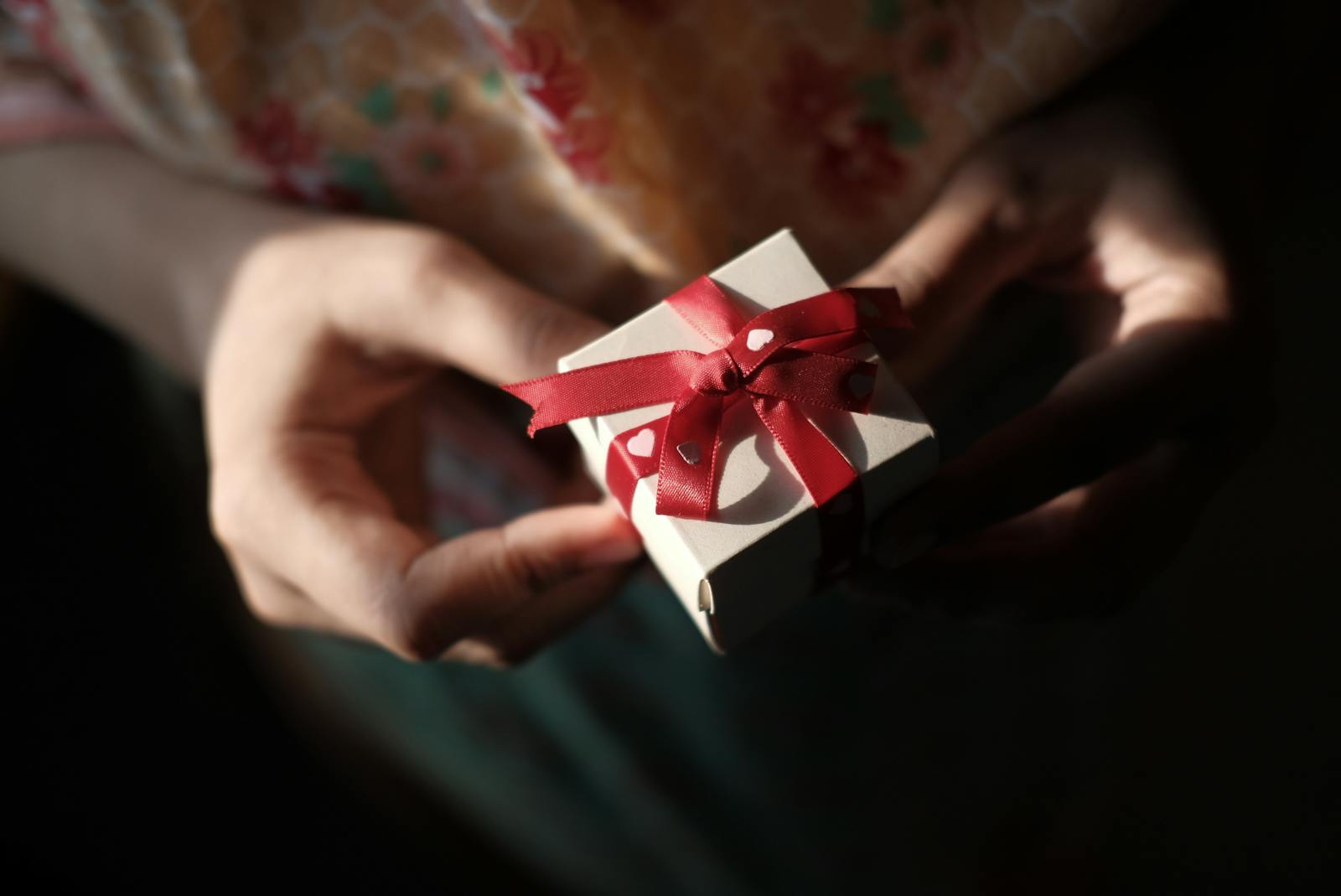
The mechanism is unglamorous. It’s letting someone bring you soup and not bringing them anything for two months. It’s accepting help and tolerating the discomfort of an open loop. It’s noticing the urge to repay and choosing, deliberately, to do nothing. To sit in the strange, exposed feeling of having received.
If you recognize yourself here, the work isn’t to stop being generous. Generosity is good. The work is to let yourself receive without instantly converting it into a debt to be retired.
Try this once. Let someone do something kind for you. Say thank you. Then do nothing. Don’t send a text apologizing. Don’t bring a gift the next day. Don’t spend a week scheming about how to balance the books. Just let it sit.
You’ll feel something uncomfortable rise. That’s the old wiring registering an open loop and panicking. It’s not a sign that you owe something. It’s a sign that you grew up somewhere where you would have.
Most adults who do this work eventually arrive at the same quiet realization. The people they cared most about, the ones they spent years trying to pay back, were never sending invoices. The invoices came from somewhere much further back — and the only person who could stop forwarding them was the person still receiving them every time someone tried to be kind.
Photo by www.kaboompics.com on Pexels