



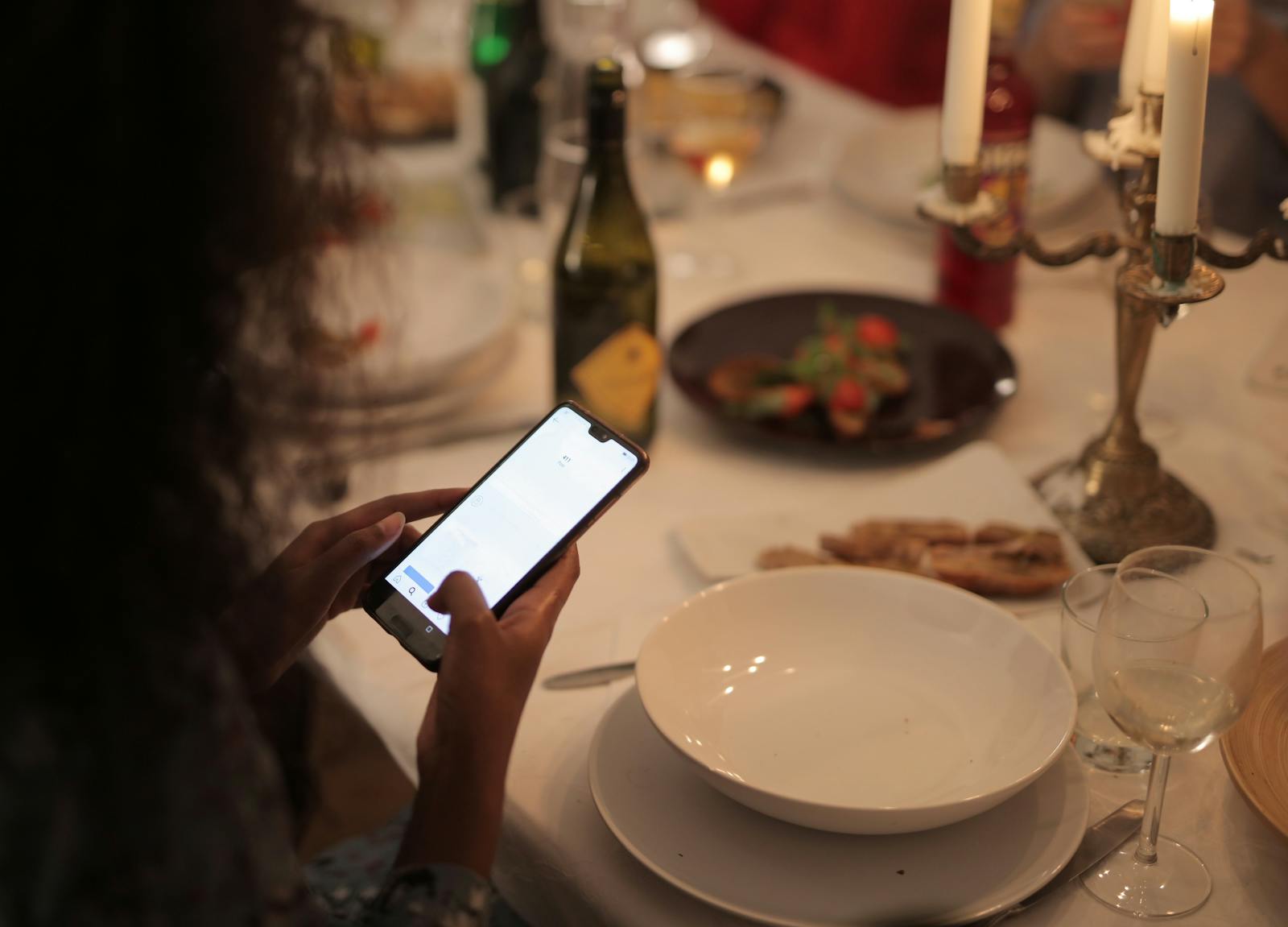
The people who keep their phones face-down on every table aren’t the ones hiding something. They’re usually the most responsive people in the room — the friend who replies to texts inside two minutes, the colleague who picks up on the second ring, the parent who has never let a call from their child go to voicemail. These aren’t people withdrawing from the world. They’re people who have learned, often painfully, what the world costs them when they leave the channel fully open.
The common reading of the gesture is wrong. Most people assume the face-down phone signals secrecy, or rudeness, or that the screen is displaying something the person doesn’t want their dinner companion to see. That interpretation collapses the moment you actually watch who does it.
Consider the contrast. A sailor in the eighteenth century could go six months without anyone reaching them. Their mother could die in Portsmouth and they wouldn’t know until they docked in Lisbon. We tend to think of that as a deprivation, and in some ways it was, but it also meant that for those six months, the sailor’s attention belonged entirely to the sailor. The phone face-down on the restaurant table is the modern person’s attempt to recreate, for ninety minutes, that eighteenth-century condition.
The reflex is older than the phone
There’s a particular kind of person who absorbed early in life that their time wasn’t really theirs. Maybe a parent who called for them constantly from another room. Maybe a household where the phone ringing at dinner meant dinner stopped. Maybe a job in their twenties where being unreachable for an hour was treated as a disciplinary matter.
Whatever the source, the lesson was the same: being interruptible meant your time belonged to whoever called first. Your plans, your conversations, your interior weather, all of it was provisional, contingent on no one needing you in the meantime.
The face-down phone is what that lesson looks like once the adult who learned it has accumulated enough self-respect to push back against it, but not enough to ignore the device entirely. It’s a wrist turn. A small mechanical gesture that says: for the next hour, I am attempting to be the person who decides what gets my attention.
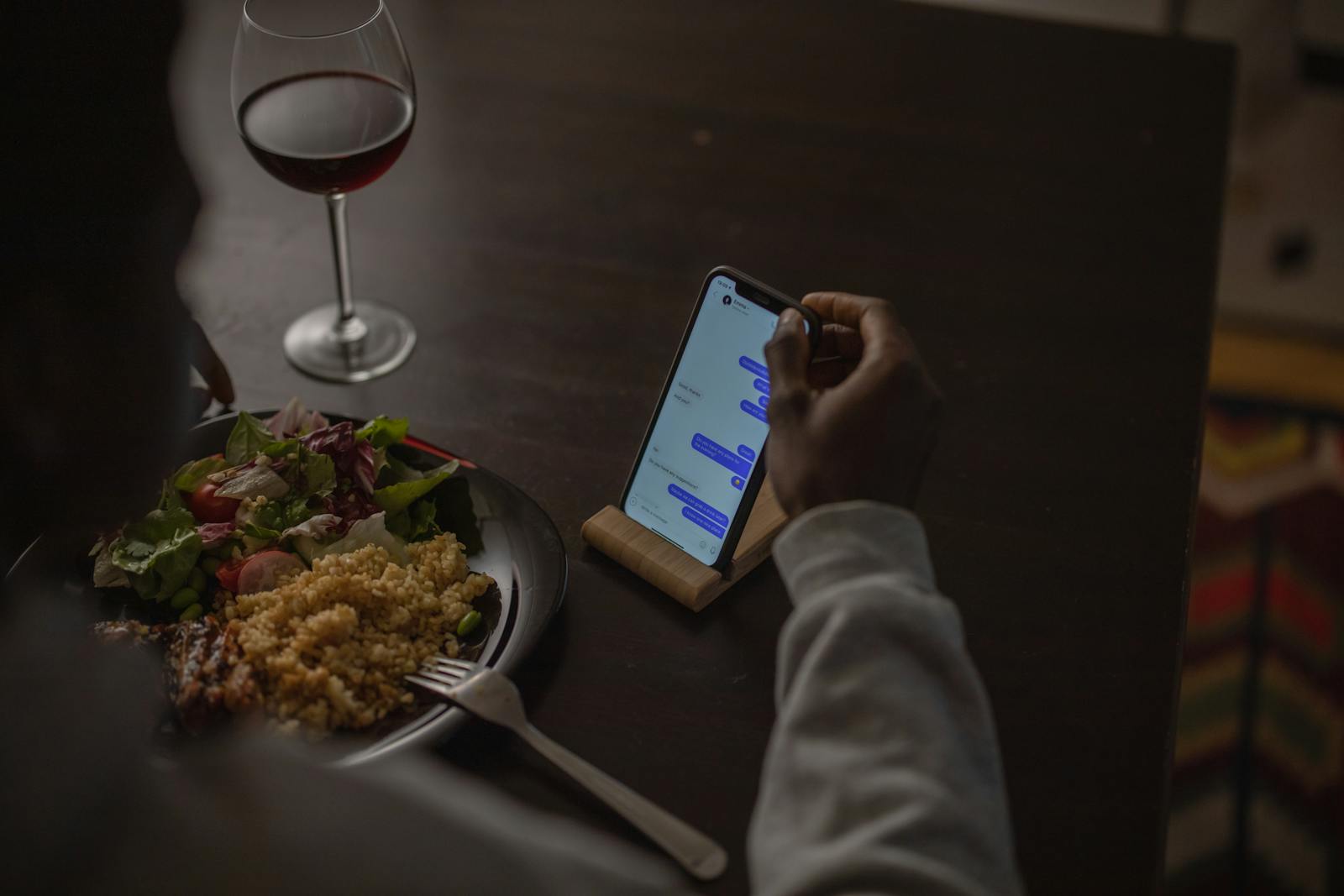
What the research actually shows
The instinct turns out to be well-founded. A widely cited 2017 study from the University of Texas, summarized in Harvard Business Review, found that the mere presence of a smartphone, even when silent and face-down, measurably reduced participants’ available cognitive capacity. The phone didn’t have to ring. It didn’t have to buzz. It just had to be in the room.
That finding is worth sitting with. The device is doing something to your attention even when it’s doing nothing. Part of your brain is running a background process, monitoring for the possibility of interruption. Turning the screen down doesn’t fix that entirely, but it removes the visual trigger, the lit rectangle that confirms, every few minutes, that someone might be trying to reach you.
Analysis of face-down phone behavior has shown that the visible presence of a mobile during a task can degrade performance on attention-demanding work. The effect is strongest, predictably, on the tasks that require sustained focus.
So the face-down move isn’t paranoia. It’s a small, evidence-aligned adjustment by people who can feel the cognitive tax of the device even when nobody else seems to notice it.
The price of being constantly available
The deeper psychological story is about who set the terms. Most of us were sold the smartphone as a tool of freedom: you could be reached anywhere, which meant you could go anywhere. What that pitch left out is that being reachable everywhere is the same thing as being on call everywhere. And being on call is a particular kind of unpaid shift that does not end.
People who keep the phone face-down have usually figured this out the hard way. They went through a period where they answered everything, replied to everyone, treated every notification as a moral obligation. And at some point the cost showed up. In sleep. In their marriage. In the strange feeling of having lived through a Saturday without remembering anything they did.
A recent meta-analysis on partner phubbing — the act of snubbing your partner by attending to your phone — found consistent links between phone-mediated interruption and lower relationship satisfaction. The presence of the device, even unused, was associated with reduced quality of face-to-face interaction.
None of this is exotic. It’s confirmation of what most attentive adults already suspect: the people you’re with can feel the device. They can feel the half-attention. They can feel, particularly, the moment your eyes flick toward the screen mid-sentence.
Why face-down rather than away
You might ask why these people don’t just leave the phone in another room, or in the car, or switched off entirely. That’s the recommendation that gets handed down by the digital wellness industry, and on paper it’s correct.
In practice it ignores the actual situation most adults are in. They have a parent in declining health. They have a child at school. They have a sibling whose marriage is collapsing. There’s a real category of call they cannot afford to miss, and pretending otherwise is a privilege most people don’t have.
The face-down phone solves this. The channel stays open for the genuine emergency. What gets blocked is the constant low-grade visual nag of the screen lighting up with previews, badges, banners, the small hijackings that turn an hour of dinner into an hour of partial attention split across forty notifications you didn’t ask for.
It’s a compromise, not a solution. But adult life is mostly compromises, and this one is more honest than the alternatives.

The original wound, and what the body remembers
Where does the deeper sensitivity come from? In my experience, the people most likely to perform this small ritual are people who learned, somewhere before they had words for it, that adults around them treated their time as community property. This is rarely about cruelty. It’s usually about households where one parent worked too much, or where a sibling’s needs were chronic, or where the family ethic was that nobody got to say no to a request without a documented reason. The child grew up understanding that being available was the price of being loved, and being unavailable, even momentarily, was a small betrayal.
That child becomes the adult who answers every text inside two minutes. They also become the adult who, somewhere around forty, starts to notice that the responsiveness has eaten them alive — and not just emotionally. Each ping is a small alerting event. Your heart rate moves. Your attention shifts. Your body briefly readies itself for something to deal with, and then, when the something turns out to be a sale at a clothing store you bought from once in 2019, your body has to come back down again. Do that two hundred times a day for a decade and the cumulative effect is real. Research from the University of Houston has documented that physical stress signals, like increased face-touching, can show up as measurable indicators of underlying tension that the person themselves often hasn’t consciously registered.
The face-down phone is the first visible sign of the rebellion. It’s the smallest possible gesture in the direction of a self that gets to choose, and it’s also a small somatic intervention — one less visual trigger keeping the alert system online. I wrote last week about the same gesture viewed from a slightly different angle — the way constant reachability lets other people put themselves at the center of your day. The interruptibility framing is the inside view of that same problem. One is about who’s running the show. The other is about whose clock you’re keeping.
Why the gesture is so small
The reason this particular ritual matters is that the small gestures are where adult autonomy actually gets defended. The big ones — the elaborate digital detoxes, the dramatic announcements that you’re going off the grid for a while, the productivity-system overhauls — mostly fail. They require sustained willpower against a world that keeps demanding your attention, and willpower is a finite resource.
What works is the boring, repeatable, almost invisible move. The wrist turn. The decision, repeated several times a day, that this conversation doesn’t have to compete with a notification banner.
Carol Ryff’s framework of psychological well-being identifies autonomy — the capacity to resist external pressure and act according to your own values — as one of the load-bearing elements of mental health. Most people don’t get to express autonomy in dramatic ways. They express it in small, repeated refusals. The phone face-down is one of those refusals, captured in a single gesture.
What it is not
It’s worth being honest about what the gesture isn’t doing. It isn’t fixing the underlying compulsion. People who flip the phone face-down still check it more than they want to. They still feel the phantom buzz. They still, sometimes, lose entire evenings to the device.
And not everyone who does it is doing it for the reasons described here. Some people are genuinely hiding a screen from a partner. Some are performing a kind of detachment they don’t feel. Some are doing it because they saw someone else do it and it looked considerate.
The larger group, though, are doing it half-consciously, the way you’d close a door behind you when coming in from the rain. They aren’t trying to seem mysterious. They’re trying to give themselves an hour of weather they chose. Silicon Canals described the gesture as the smallest act of sovereignty most people have left, which is about right.
The connection to other small reclamations
This pattern lives alongside others. People who learned early that being seen meant being asked for more than they had to give often develop a quieter relationship with authenticity, where stopping the performance becomes its own form of self-protection.
Similarly, people who can’t quite trust that their time is theirs often build patterns that observers misread. They sit with strong self-worth that looks like aloofness from the outside. They guard the small territory they have.
The face-down phone fits inside that broader vocabulary of small reclamations. None of these gestures, on their own, change a life. Stacked together, repeated daily, they describe a person slowly figuring out which pieces of themselves they actually intend to keep.
The honest question
If you’re someone who does this, the question worth sitting with isn’t whether the gesture is enough. It almost certainly isn’t. The question is what would change if you treated your time as belonging to you by default, rather than as belonging to whoever called first.
That sounds simple. It is not. People who grew up interruptible feel a low-grade guilt every time they’re not available. The phone going to voicemail produces a small spike of shame. The unanswered text feels like a moral failure. None of this is rational, but rationality has nothing to do with it. The pattern was installed early, and it runs underneath thought.
The face-down phone is a way of testing, in a small contained dose, what it feels like to push back against that pattern. For ninety minutes at a restaurant, you experiment with being the person who gets to choose. You find out the world doesn’t end. The emergency call you were dreading doesn’t come, or if it does, you take it. The texts pile up and turn out to be mostly things that could have waited.
Over time, you start to suspect that maybe most of the urgency you’ve been responding to was never urgent. That maybe the people who trained you to be reachable had their own reasons, none of which were really about you. That maybe the small gesture, repeated enough times, is teaching you something the loud gestures never could — that responsiveness was never the same as love, and availability was never the same as worth.
Your time was always yours. The phone face-down is just the smallest possible way of remembering it.
Photo by Andrea Piacquadio on Pexels