



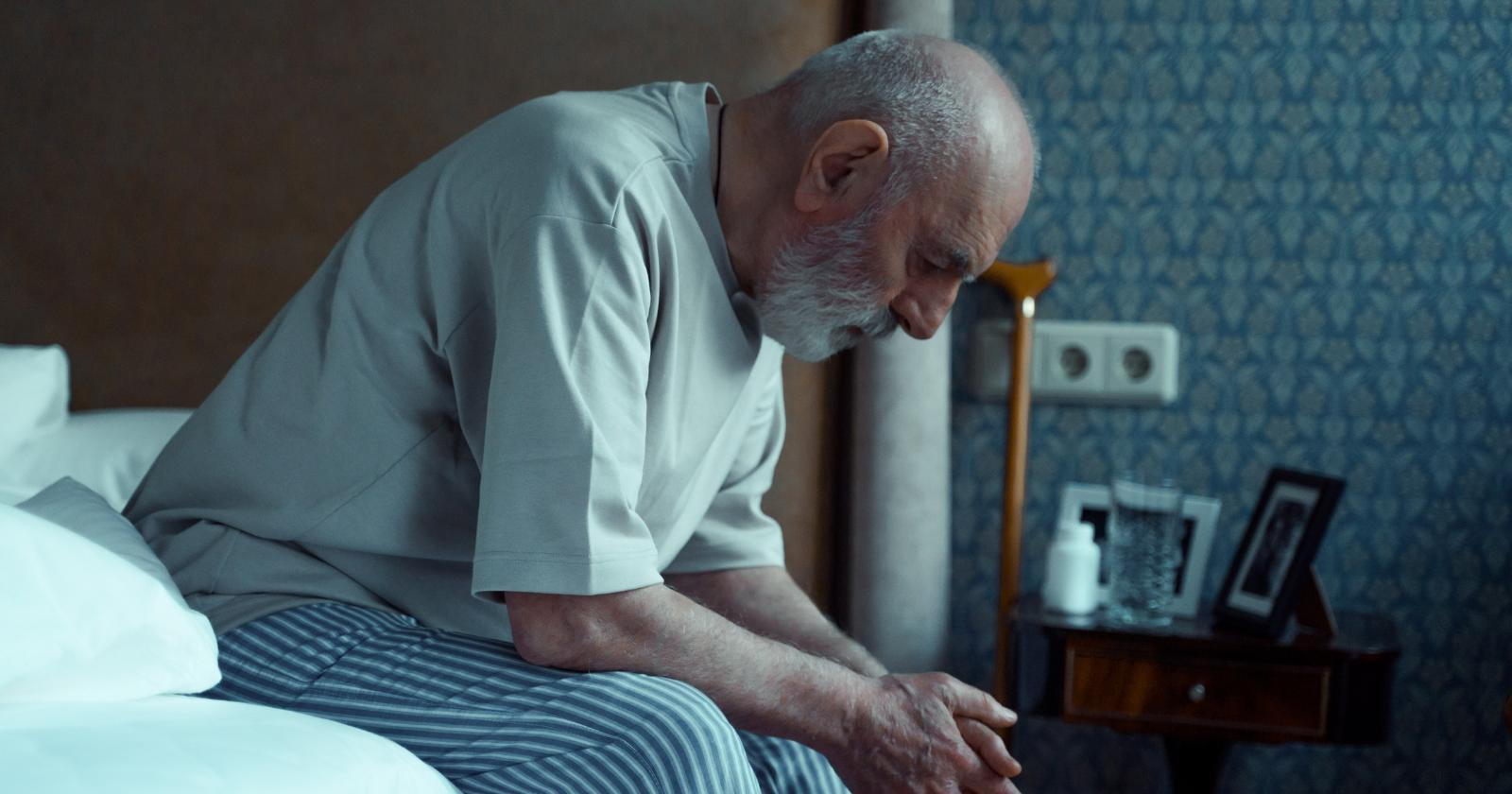
My dad doesn’t call to talk about his feelings. He calls to tell me the weather in Melbourne, to mention that the footy was on, to ask if I’ve eaten. Then he says “right, well” and hangs up in under four minutes. He’d say he’s fine. And maybe he is. But I’ve been thinking a lot lately about what “fine” actually costs a generation of men and women who were raised to never need anyone.
We talk endlessly about Gen Z loneliness. The memes, the thinkpieces, the TikToks of people crying about having no friends. And yes, the data backs it up. But there’s a quieter story happening at the other end of the age spectrum, one that doesn’t get nearly enough airtime. The boomers, now in their 60s and 70s, are dealing with a loneliness that’s different in kind, not just degree. It’s not just that the kids moved out or that friends got sick or relocated. It’s something more structural, built into who they were trained to be.
The self-reliance that seemed like strength
Baby boomers were shaped by a very specific cultural moment. According to psychologists, the boomer generation grew up in the post-World War II era marked by rapid industrialization, cultural shifts, and what one clinical psychologist described as “less emotional handholding.” The message received loud and clear from parents who had survived the Depression and the war was this: you handle things yourself. You don’t complain. You work hard and you keep going.
That blueprint produced genuinely impressive qualities. Resilience, work ethic, the ability to push through discomfort. But it also encoded something else, something that’s only becoming visible now: a deep-seated suspicion of needing other people. Mental health researchers note that boomers inherited a “tough-it-out” attitude from their parents, and many still carry the belief that discussing emotional struggles openly is a sign of weakness. That’s not a character flaw. It’s a learned survival strategy that made complete sense in the world they grew up in. The problem is that survival strategies don’t always translate well into a different season of life.
Work was often the primary vehicle for boomer identity and social connection. Your job gave you colleagues, structure, purpose, community. It gave you somewhere to be and someone to be. When retirement hits, all of that evaporates at once. And if you’ve spent fifty years building your sense of self around competence and productivity, the sudden absence of both can leave a person genuinely adrift, without the relational vocabulary to even articulate what’s wrong.
The numbers are quieter than you’d expect, but they’re moving
Here’s the thing that tends to surprise people: raw loneliness statistics actually show boomers as less lonely than younger generations right now. Cigna’s loneliness research found that Gen Z adults report the highest rates of loneliness at around 71%, while boomers sit closer to 44%. At first glance, that looks reassuring. But dig a little deeper and the picture shifts.
That same Cigna research found that boomer loneliness increased by 9% in a single year, the steepest jump of any generation. Meanwhile, research tracking older Americans over time shows that social isolation increases sharply after age 75, and the actual number of lonely individuals is likely to rise significantly as the boomer cohort ages into their 80s. There’s also a question of underreporting. If you’ve spent a lifetime believing that needing connection is weakness, you’re not going to tick “lonely” on a survey form. You’re going to say you’re fine and change the subject.
The health stakes of getting this wrong are serious. The U.S. Surgeon General has warned that widespread loneliness poses health risks as deadly as smoking up to 15 cigarettes daily, and loneliness increases the risk of premature death by nearly 30 percent. It’s also associated with significantly elevated risk of stroke, heart disease, and dementia. These aren’t abstract statistics when you’re talking about a generation now entering the age bracket where those conditions start showing up.
What nobody prepared them for
The deeper issue is that self-reliance and connection were never actually in conflict. But an entire generation was raised as if they were. Asking for help was framed as a burden to others, or worse, evidence of inadequacy. Vulnerability was, at best, a private matter. So the muscles required to build and sustain genuine intimacy, the ability to say “I’m lonely,” “I’m scared,” “I need you,” were never really developed. And muscles you don’t train don’t suddenly appear when you need them at 72.
This shows up in specific patterns. Dr. Ernesto Lira de la Rosa, a psychologist, notes that boomers may have been repeatedly told not to cry or to “tough it out” as children and internalized this deeply. “When we suppress emotions, they don’t go away,” he explains. “They often show up as stress, anxiety or even physical health issues.” What looks from the outside like stoic independence is sometimes, from the inside, a person who genuinely doesn’t know how to reach out, who has practiced not reaching out for so long that the impulse has gone quiet.
My dad is the most capable person I know. He can fix anything, build anything, figure anything out. He showed love by doing things for people, not saying things to them. That’s not nothing. But it’s also not the same as connection, and I think he’s only beginning to understand that distinction now, in his 70s, with fewer people around to do things for.
The path forward isn’t grand, it’s small
Buddhism has something useful to say here. One of its central insights is that suffering comes from clinging, including clinging to a fixed idea of who we are. The identity of “someone who doesn’t need anyone” is exactly that kind of clinging. It protected boomers when they needed protection. But identity, like everything else, is impermanent. The invitation at this stage of life isn’t to abandon resilience, it’s to expand the definition of it.
Real resilience, it turns out, includes the capacity to receive. To let someone help you. To tell a friend you’ve been having a hard time. To show up to a community, a class, a church, a club, without the pretense of total self-sufficiency. These aren’t soft skills. For a generation that was trained away from them, they’re genuinely hard. They require practice, repetition, and a willingness to tolerate the discomfort of being seen as imperfect.
The good news is that the brain remains plastic enough to learn new relational patterns at any age. Small daily practices matter more than dramatic transformations. A regular phone call with someone who actually asks “how are you” and waits for an answer. A habit of saying “I’ve been thinking about you” instead of just reporting the weather. These are not trivial acts. For a generation that was never taught to need anyone, learning to need people, gracefully, might be the most courageous thing they do.
I think about my dad hanging up after four minutes. And I wonder what would happen if I stayed on the line a little longer and asked him something he didn’t expect. Not about the footy. About him.