



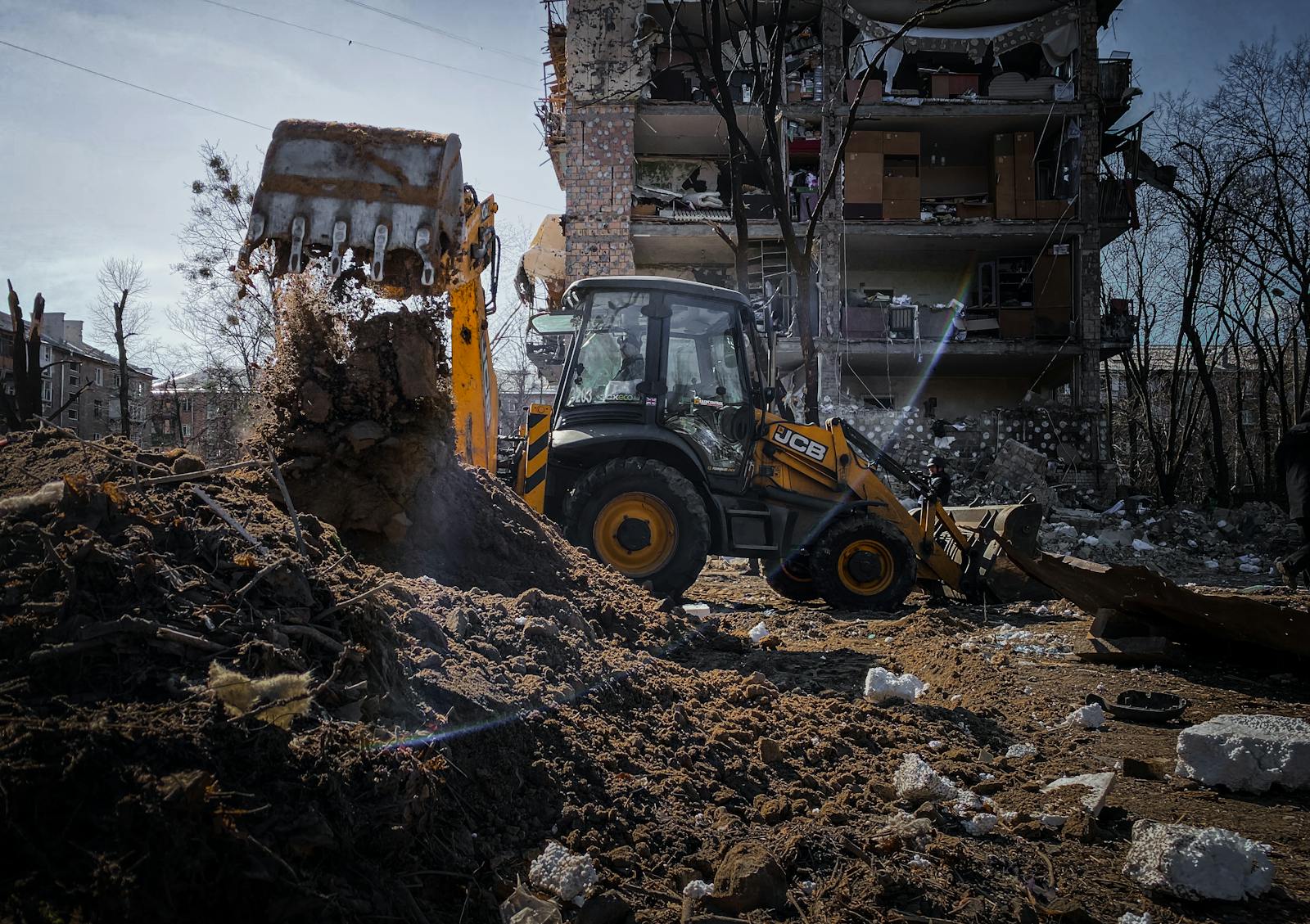
Displaced Lebanese families began returning to southern Lebanon this week to find ruined homes, active Israeli bulldozers and reports of a newly drawn buffer zone affecting dozens of towns and villages. A temporary ceasefire that reportedly took effect in mid-April has not stopped Israeli military operations, and diplomats on both sides concede the pause is less a peace than a holding pattern.
This is not merely another failed ceasefire in a region accustomed to them. What distinguishes the current arrangement is a structural defect that previous Lebanon ceasefires did not share: Israel is negotiating territorial and security terms with the Lebanese state while the military reality on the ground is controlled by a non-state actor that is not party to the agreement and answers to Tehran. The result is a ceasefire that functions not as a step toward resolution but as diplomatic staging for the next phase of military pressure — a pattern that, if it holds, will redefine how occupations are packaged in the language of peace.
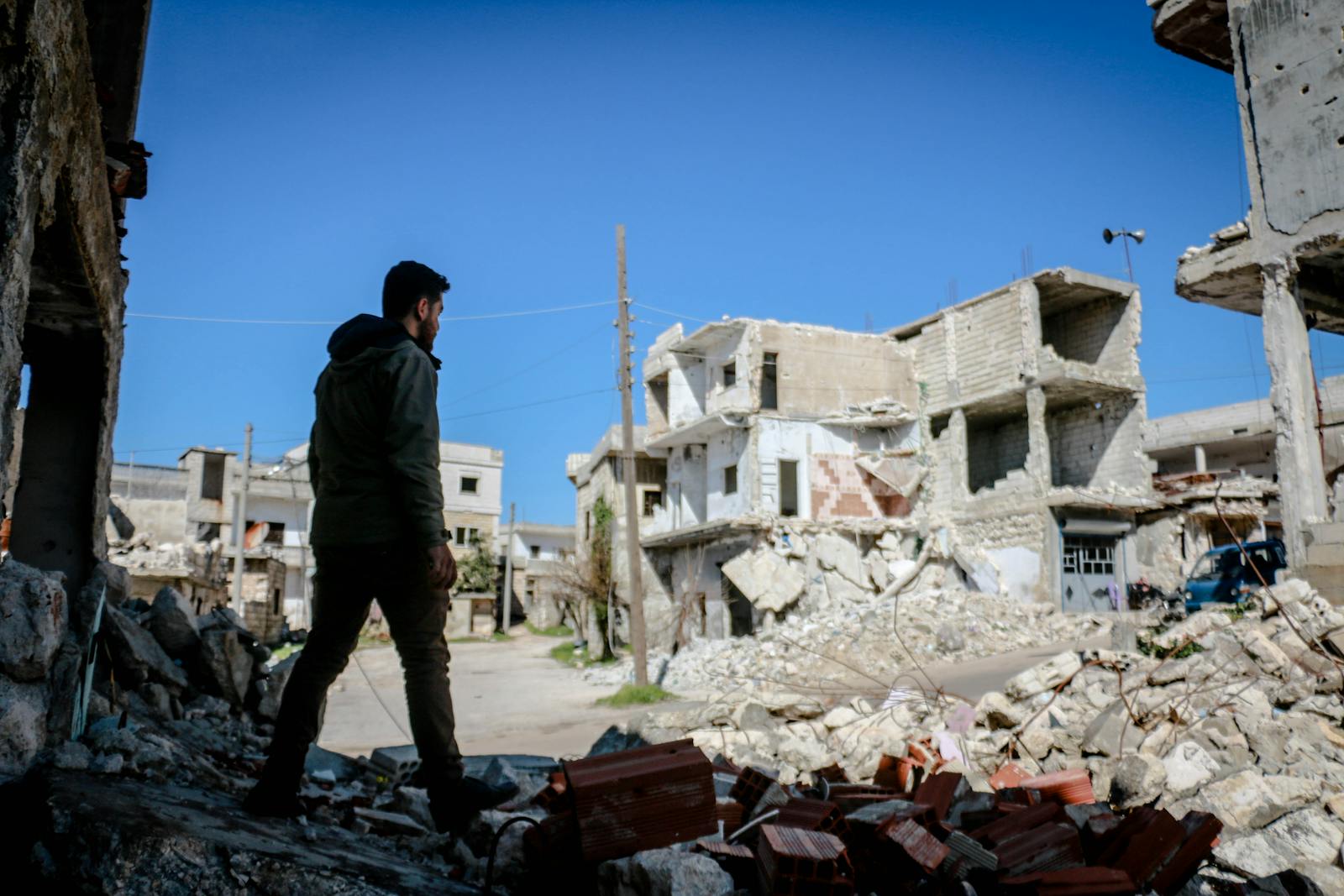
According to Al Jazeera’s reporting from southern Lebanon, preliminary assessments by Lebanese authorities put the damage at nearly 40,000 homes destroyed or damaged across weeks of intensified Israeli strikes. Residents who made the drive south described streets they no longer recognized, with some reporting destruction so severe they were forced to leave again.
A ceasefire with an asterisk
The terms of the deal, reportedly brokered by the Trump administration, run for a limited period with the possibility of extension by mutual agreement. BBC reporting on the US State Department framing describes the pause as intended to open space for good-faith negotiations toward a permanent agreement.
That framing sits uneasily with the facts on the ground. Israeli bulldozers continued demolition work inside Lebanese territory after the ceasefire took effect. Prime Minister Benjamin Netanyahu has reportedly said Israeli troops will remain inside a security zone he calls essential to preventing another invasion from the north, with reports indicating Israeli officials have stated their forces will remain in the security zone indefinitely.
Reports indicate Israeli Defence Minister Israel Katz has stated the area between the buffer zone and the Litani River had not been cleared of fighters and weapons and that the task would be completed either diplomatically or through continued military operations. The Lebanese government has no mechanism to contest either option.
The structural contradiction at the center of the deal
Reporting from the border described the buffer as more than a defensive line. Israeli officials have reportedly used the term ‘yellow line’ to describe the buffer zone boundary, and sources indicate it extends deep into Lebanese territory in some places, encompassing dozens of towns and villages that Israeli officials say will remain under Israeli control for the duration of negotiations. For displaced southerners, the distinction between a demilitarized zone and an occupation is academic. Families returning to villages inside the reported buffer zone are being turned back by Israeli troops. Those outside it are returning to neighborhoods where the infrastructure — water, power, roads, bridges — has been systematically disabled. Reports indicate that shortly before the ceasefire took effect, Israeli forces destroyed a major bridge linking the south to the rest of the country, a move that has deepened Lebanese fears of de facto long-term occupation.
This is where the deal’s fundamental dysfunction becomes clear. The ceasefire text does not mention Hezbollah, the Iran-backed group that has been exchanging fire with Israel during the recent conflict. Hezbollah is not a signatory and is not part of Lebanon’s formal security apparatus, yet it is the military actor whose behavior the agreement is designed to constrain. The group has signaled willingness to observe the pause but has refused to disarm without agreement on a Lebanese national defense strategy, and has tied its cooperation to broader regional diplomacy involving Iran. Reports indicate Tehran’s foreign ministry has welcomed the deal and expressed support for Lebanon, though Iran has continued to insist, over US and Israeli objections, that its own ceasefire with Washington should cover Lebanon as well.
Israel, in other words, is negotiating with the Lebanese state over territory controlled, in practice, by a non-state actor that answers to Tehran. The Lebanese government can neither compel Hezbollah to disarm nor prevent Israel from using Hezbollah’s presence as justification for indefinite military operations inside sovereign Lebanese territory. Analysis of the deal’s arithmetic suggests the limited window may be too short for disarmament talks and too long for purely tactical purposes, which suggests its real function is to stage the next phase of military pressure under a diplomatic cover. The buffer zone is not a confidence-building measure; it is the structural expression of this contradiction, a zone where the ceasefire’s failure is built into the map.
The human ledger
The scale of what Lebanon is absorbing is worth stating plainly. According to the Lebanese health ministry figures cited in BBC coverage of the conflict, more than 2,100 people have been killed and 7,000 wounded in Israeli attacks on Lebanon since early March. The ministry does not distinguish between combatants and civilians in its topline figure, but reports indicate the dead include hundreds of women and children. Dozens of health workers have been killed. Over a hundred Israeli attacks have struck ambulances or medical facilities. BBC Verify analysis has reportedly confirmed the destruction of well over a thousand buildings.
Reports indicate Hezbollah attacks during the same period have killed a small number of civilians inside Israel. Israeli soldiers have also died in combat in Lebanon.
The displacement figures tell the rest of the story. Nearly 40,000 damaged or destroyed homes is a housing crisis that will take years to resolve even if the ceasefire holds, and coverage of the broader displacement crisis shows a substantial portion of the country has been uprooted at various points during the past two years of regional conflict.
The diplomatic track, and its limits
Reports indicate Lebanon and Israel held rare direct talks in Washington recently, their first sustained face-to-face engagement since the last round of indirect negotiations collapsed. Lebanese Prime Minister Nawaf Salam reportedly welcomed the ceasefire and said he hoped it would let displaced families return home. Netanyahu described the ceasefire as an opportunity for a historic peace agreement.
The two sides arrive at the table with incompatible priorities. Beirut wants full Israeli withdrawal, reconstruction financing and a clear framework for the south’s civil administration. Israel wants Hezbollah disarmed, the buffer zone formalized and a verification regime with teeth. Neither side currently has the domestic political room to grant the other what it needs.
One detail from Israeli reporting captures how fragile the political consensus is on the Israeli side as well. Reports indicate that Netanyahu called the security cabinet meeting that approved the ceasefire with very short notice, and that ministers were not given a chance to vote. That is not the process of a government confident in the deal it just signed.
What this pattern means beyond Lebanon
Three indicators will determine whether this ceasefire breaks from the pattern or confirms it: whether Israeli bulldozer and demolition activity inside the buffer zone continues or pauses (it has not paused so far); whether Hezbollah holds its fire in the absence of a formal commitment; and whether the Washington talks produce any written framework before time runs out.
But the deeper problem extends well past these tactical markers. The previous pattern, covered in earlier reporting on escalation cycles along the border, shows that ceasefires in this conflict function as resets rather than resolutions. Each pause leaves Israel in slightly better tactical position and Lebanon in slightly worse economic shape. What makes this iteration dangerous beyond its immediate geography is that it is establishing a template: a ceasefire negotiated with a government that does not control its own territory, enforced by demolitions the ceasefire was supposed to stop, sustained by a diplomatic process whose timeline is designed to expire before it can produce results. If this model works for managing the politics of occupation in southern Lebanon, there is no reason it will not be applied elsewhere — in Gaza, in the West Bank, in any theater where a powerful military seeks the diplomatic cover of a peace process without the constraints of an actual peace. The families now picking through rubble in Nabatieh and the villages along the Litani are not just living inside the gap between what a ceasefire is called and what it actually does. They are living inside a proof of concept.
Photo by Алесь Усцінаў on Pexels