


Copernical Team
Durable Parker Solar Probe going strong after first five years
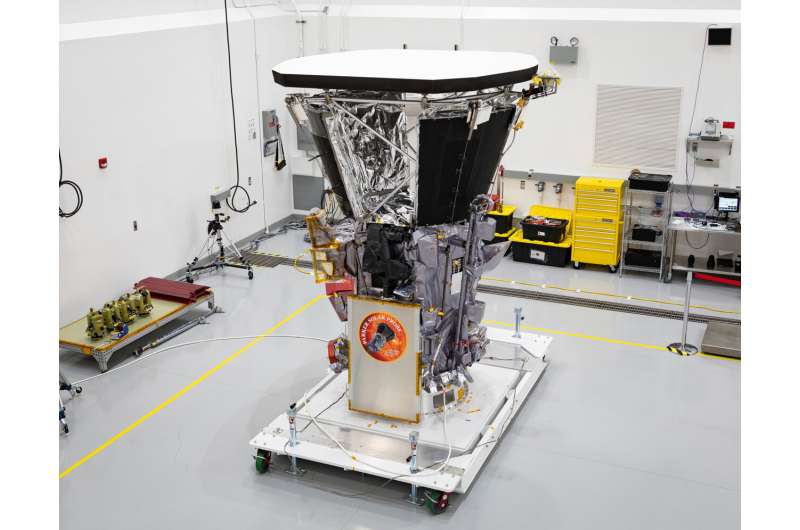
On Aug. 12, 2018—five years ago this week—NASA's Parker Solar Probe blasted off atop a powerful Delta IV rocket from what is now Cape Canaveral Space Force Station. The predawn launch into the skies over the Florida coast marked the start of a game-changing mission to unlock the secrets of the solar wind—and the culmination of decades of development to craft a robotic explorer able to withstand the heat and radiation near the sun like no other spacecraft before it.
Designs for a "solar probe" started coming together in 1962, just four years after the National Research Council's Space Studies Board first proposed a mission to explore the environment near the sun.
Spacecraft could shuttle astronauts and supplies to and from the moon on a regular basis
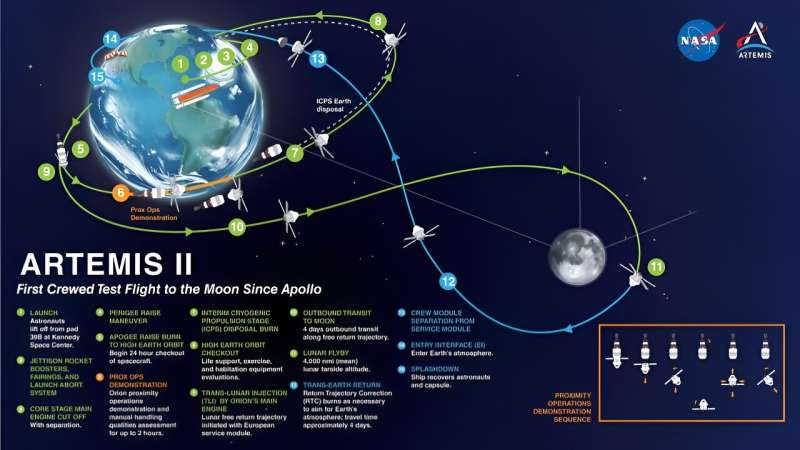
Multiple space agencies plan to send astronauts, cosmonauts, and taikonauts to the moon in the coming years, with the long-term goal of establishing a permanent human presence there. This includes the NASA-led Artemis Program, which aims to create a "sustained program of lunar exploration and development" by the decade's end. There's also the competing Russo-Chinese International Lunar Research Station (ILRS) effort to create a series of facilities "on the surface and/or in orbit of the moon" that will enable lucrative research.
Beyond these government-agency-led programs, there are many companies and non-government organizations (NGOs) hoping to conduct regular trips to the moon, either for the sake of "lunar tourism" and mining or to build an "International Moon Village" that would act as a spiritual successor to the International Space Station (ISS). These plans will require a lot of cargo and freight moving between Earth and the moon well into the next decade, which is no easy task.
An improved radioisotope thermoelectric generator could dramatically reduce the weight of interplanetary missions
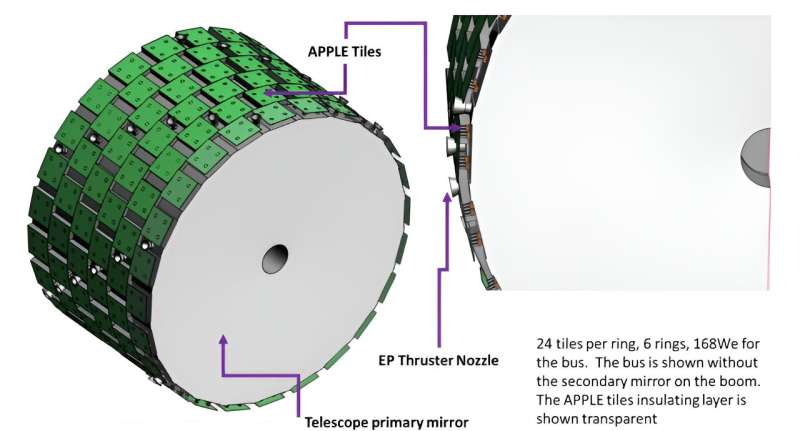
Radioisotope thermoelectric generators (RTGs) are the power plants of the interplanetary spacecraft. Or at least they have been for going on 50 years now. But they have significant drawbacks, the primary one being that they're heavy. Even modern-day RTG designs run into the hundreds of kilograms, making them useful for large-scale missions like Perseverance but prohibitively large for any small-scale mission that wants to get to the outer planets. Solar sails aren't much better, with a combined solar sail and battery system, like the one on Juno, coming in at more than twice the weight of a similarly powered RTG.
To solve this problem, a group of engineers from the Aerospace Corporation and the US Department of Energy's Oak Ridge National Lab came up with a way to take the underlying idea of an RTG and shrink it dramatically to the point where it could not potentially be used for much smaller missions.
Putting the S in the first Meteosat Third Generation Sounder
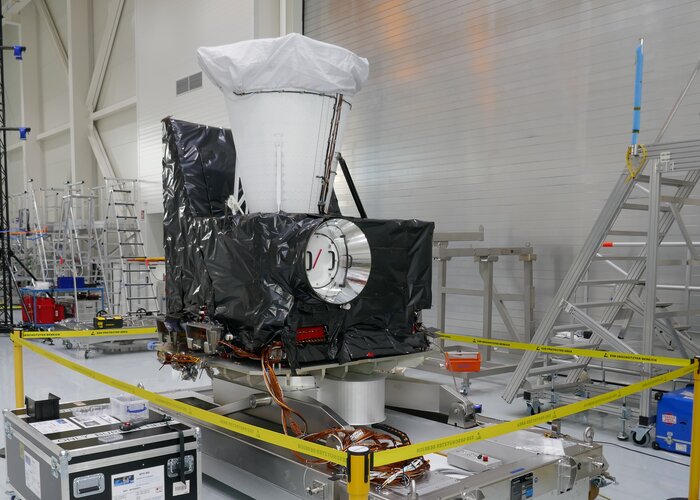
Following on from the launch of the first Meteosat Third Generation weather satellite, MTG-I1, last December, the focus is now on getting its partner satellite, MTG-S1, ready for liftoff next year – and a significant milestone has been reached. The satellite has been equipped with its main instrument, the Infrared Sounder, hence the satellite’s name, and also the Copernicus Sentinel-4 instrument, an ultraviolet, visible, near-infrared light spectrometer, or UVN for short.
Illuminating Earth’s shine

A climate experiment called Earthshine is part of ESA astronaut Andreas Mogensen’s Huginn mission. The experiment aims to understand how Earth reflects sunlight to improve climate models. And you can help Andreas and the scientists!
Gaia telescope data challenges long-held gravity theories
 A groundbreaking study, harnessing observations from the European Space Agency's Gaia space telescope, has revealed evidence of discrepancies between observed stellar motions and predictions from Newton's universal law of gravitation and Einstein's general relativity.
The research, spearheaded by Professor Kyu-Hyun Chae of Sejong University, Seoul, scrutinized the orbital dynamics of appro
A groundbreaking study, harnessing observations from the European Space Agency's Gaia space telescope, has revealed evidence of discrepancies between observed stellar motions and predictions from Newton's universal law of gravitation and Einstein's general relativity.
The research, spearheaded by Professor Kyu-Hyun Chae of Sejong University, Seoul, scrutinized the orbital dynamics of appro New technique measures structured light in a single shot
 Structured light waves with spiral phase fronts carry orbital angular momentum (OAM), attributed to the rotational motion of photons. Recently, scientists have been using light waves with OAM, and these special "helical" light beams have become very important in various advanced technologies like communication, imaging, and quantum information processing. In these technologies, it's crucial to k
 New insights into the potential for early steps of biological evolution on Mars
 That the planet Mars had habitable surface environments early in its existence has been firmly established by the scientific community. These environments provided water, energy sources, elements like carbon, hydrogen, nitrogen, oxygen, phosphorus, and sulfur, as well as critical catalytic transition metals associated with life as we know it. However, whether that potential stimulated further pr
 Blazing a path to the Gediz Vallis Ridge: Sols 3914-3915
 Earth planning date: Wednesday August 8, 2023: Curiosity continues her steady winter drive through the Kalavryta quadrangle with her sights set on the Gediz Vallis ridge ahead! Behind her, Curiosity leaves evidence of her route as wheel tracks in the sand and dust - a robotic version of footprints on the Martian surface. Interestingly, the gaps in the rover wheels were designed with a pattern th
 The Dragon's Egg Too Tough To Crack
 Perseverance spent this week on Mars roving across the top of the Jezero fan- from Mount Meeker to Dream Lake- in search of yet another sample for return to Earth. This upper region known as Lobe K is expected to contain some of the most recently deposited materials within the delta sequence, providing the opportunity to place both upper and lower bounds on the timing of aqueous activity that bu


