
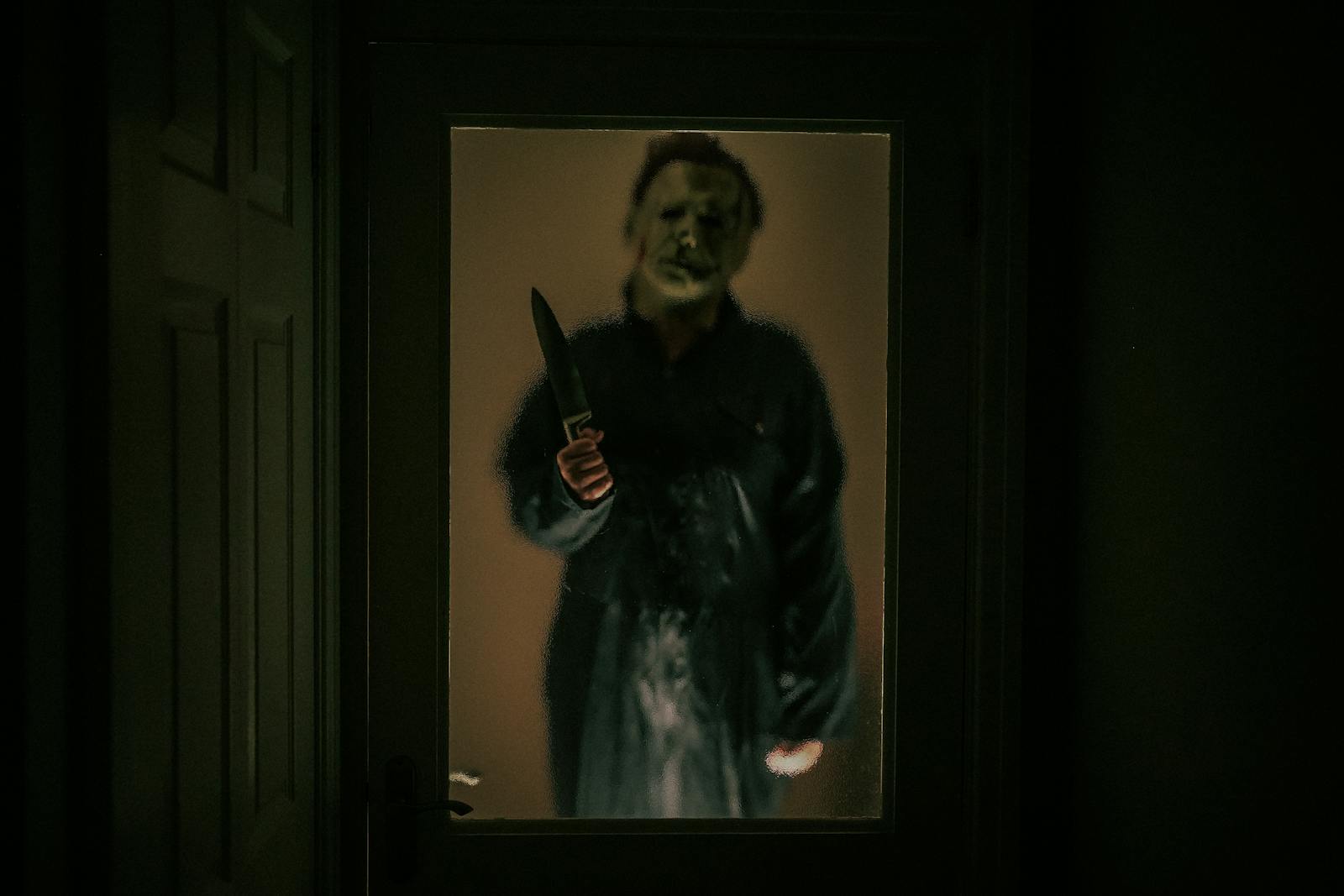
A door closing on someone is a small physics problem with a long emotional tail. The arm reaches, the hinge swings, the latch clicks, and somewhere in the person on the other side, a tiny ledger updates: I was not worth the three seconds. The people who hold doors and wait, who actually pause until the stranger crosses the threshold, are usually not running on etiquette. They are running on memory.
Watch them closely. They glance back before they pull. They calibrate distance. They make the micro-decision to absorb a small cost so someone else does not absorb a smaller humiliation. That is not manners. That is recognition.
The three-second tax nobody talks about
Every door is a tiny referendum on whether other people exist to you in that moment. Most of us pass through hundreds of them a week. The default behavior, the one taught by exhaustion and headphones and being late, is to release the handle the instant your own body clears the frame.
The three-second wait is not natural. It is learned. And almost always, it is learned the hard way.
Ask anyone who reliably holds doors and you will eventually get a story. A grocery bag that split in a parking lot while strangers stepped around it. A hospital corridor walked alone. A job interview where they jogged the last fifty feet and watched the glass swing shut on the back of someone’s coat. The body remembers the small refusals more sharply than it remembers the big ones, because the small ones come with no explanation. They are just data: you were close enough to help and chose not to.
Empathy is a transcript of what you survived
Psychologists who study how empathy actually develops keep returning to a stubborn finding: the most reliable predictor of prosocial behavior toward strangers is not personality, religion, or even upbringing. It is whether a person has occupied the position they are now being asked to imagine. Judith Orloff’s work on empathy styles distinguishes between cognitive empathy, which thinks its way into another person’s situation, and emotional empathy, which feels its way in. Door-holders tend to run on the second kind, because the door is not an idea to them. It is a sense memory.
This matters because cognitive empathy can be performed. You can read a book about being poor and develop a thoughtful position on poverty without ever feeling the shame of counting coins at a register. Emotional empathy is harder to fake and harder to teach. Clinical reflections on empathy in professional settings show that practitioners who have experienced distress themselves often bring a different quality of attention to their patients.
Holding the door is the residue of having been the person rushing toward it.
The small cruelties that train us
It is worth being honest about what creates this kind of attention. Nobody develops a reflex for noticing strangers because their childhood was easy. The kids who grew up reading rooms before they read books, who learned to clock a parent’s mood from the sound of a car door, tend to grow into adults who clock everything. That early radar quietly becomes the operating system most of them still run on, and the door is one of its most ordinary outputs.
You do not learn to wait three extra seconds in a room where you were always seen. You learn it in a room where you sometimes weren’t.
This is not a sad observation. It is a useful one. It explains why the most attentive people in a crowd are often the ones who looked invisible somewhere earlier in life. They are not being saintly. They are running a protocol they wrote when they were eight, or sixteen, or last year, and the protocol says: do not be the person who didn’t notice.
The architecture of small kindness
My wife works in immigration law, which means our dinner conversations often turn into seminars on how rules get written versus how they get lived. A statute can say one thing and mean fifteen things by the time it reaches a person standing at a counter with the wrong form. The gap between policy and experience is where most of the human cost lives, and her job is essentially to translate between the two.
I have come to think door-holding works the same way. The official rule of public life is that you treat strangers with baseline civility. The lived experience is that civility has hundreds of micro-tiers, and most people only honor the top three. The person who waits is operating at a tier most people don’t even register.
They are not following a rule. They are translating their own past into someone else’s present.
Why the three seconds feel like more
If you have ever held a door for someone who was further away than you initially estimated, you know the strange social weight of those extra seconds. The stranger speeds up, sometimes apologetically. You wave them off. There is a small negotiation happening: they are trying not to inconvenience you, and you are trying to communicate that the inconvenience was always factored in.
That negotiation is the entire point. It is the moment two strangers acknowledge that they are both made of time, that time costs something, and that one of them has decided to spend a little of theirs so the other doesn’t have to break into a jog.
Research on how empathy shapes interpersonal cognitive and emotional processes suggests that even brief, low-stakes acts of perspective-taking measurably change how people regulate their own emotions afterward. The door-holder is not just helping the stranger. They are practicing a small, daily form of self-regulation that compounds.
The people who refuse to learn it
Not everyone develops this reflex, and the absence is interesting. There are people who have absolutely been the rusher, the one with the broken bag, the one with the coat caught in the latch, and they still don’t hold doors. They have the data. They didn’t build the protocol.
Usually this is because they made a different decision about what their suffering meant. Instead of I will not let this happen to someone else, they landed on nobody held it for me, why should I hold it for them. Both responses are logical. Only one of them is generative.
I wrote recently about how some people experience kindness as a transaction with a delayed bill, and the same framework applies in reverse. If you grew up believing kindness was leverage, you will not give it away for free. You will hoard the three seconds because three seconds, multiplied across a lifetime, feels like territory.
What the body is actually doing
The neuroscience here is less mystical than people assume. Animals, including humans, react more strongly to others’ distress when they have personally experienced the same kind of distress. The brain is not running a general empathy program. It is running a recognition program, and recognition requires prior data.
This is why generic appeals to “be kind” tend to fail and specific appeals work. Be kind is abstract. Remember the last time someone let a door close on you is a key that fits an actual lock in your memory.
The transmission problem
I have a young son, and I think about this a lot when I watch him at the entrance of a store. He is at the age where doors are slightly heavier than he expects and the hydraulic ones surprise him. He has not yet had the experience of being the one rushed past. He holds doors anyway, sometimes, because he sees adults do it, but the gesture has not yet been welded to a memory.
The question I keep turning over is whether you can teach this kind of attention without the original wound. Can you raise a kid to wait three seconds for strangers without first letting the world ignore them enough times that the lesson takes? Reading fiction appears to strengthen empathy by letting readers borrow experiences they haven’t lived, which suggests imagination can do some of the work memory usually does. But borrowed experience is thinner than the real thing. A story about being left behind is not the same as the moment the door clicks shut on your face.
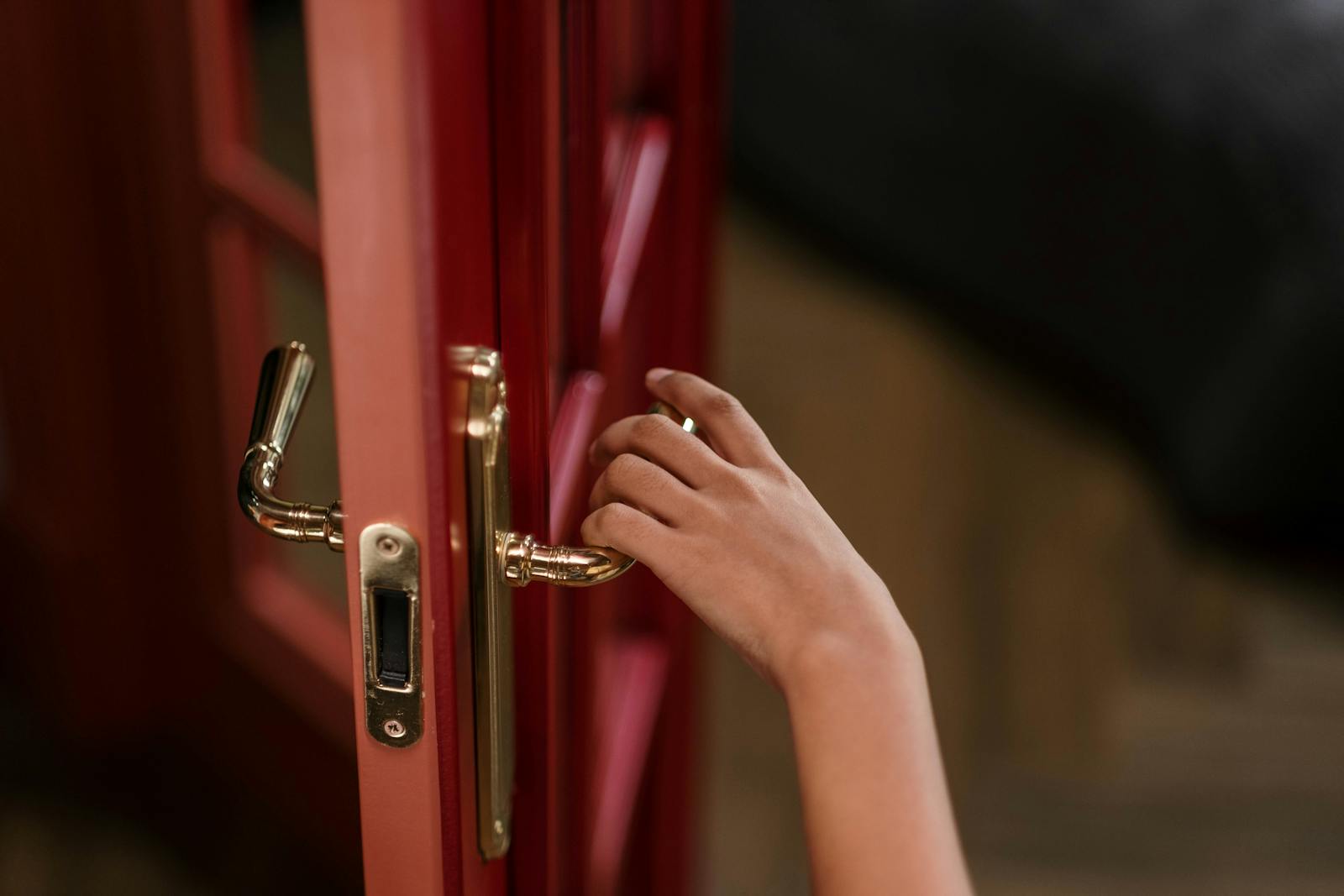
What I tell him, and what I think is roughly true, is that the goal is not to suffer enough to learn empathy. The goal is to keep noticing the small moments where another person is one second away from feeling unseen, and to spend the second.
The stranger as evidence
Border towns teach this earlier than most places. Growing up in El Paso, you learn that the line between “us” and “them” is mostly administrative, and that the same person can be a neighbor on Tuesday and a stranger on Thursday depending on which side of a bridge they happen to be standing on. The categories are softer than the official paperwork wants them to be.
People who grow up at edges tend to over-index on small acknowledgments because they have seen what happens when acknowledgment is withheld. The held door, the eye contact, the half-nod at a checkout, these are not just civilities in places like that. They are how a community keeps reminding itself that strangers are still people whose categories are temporary.
The compounding effect
The honest math on three-second door waits is that no individual instance matters very much. The stranger you held the door for will probably forget you within ninety seconds. You will forget them within thirty. The exchange does not produce a measurable change in either of your lives.
What it produces is a pattern. The door-holder is practicing, dozens of times a week, the act of registering another person’s existence and adjusting their behavior accordingly. That practice generalizes. It shows up in how they listen at meetings, how they handle disagreements with their partner, how they treat the person taking their order. The door is the visible tip of an underlying disposition that touches everything.
People who get genuinely better at being human as they age tend to be the ones who keep practicing these small recognitions. We’ve explored before how the people who quietly let go of scorekeeping tend to be the ones whose later years feel lighter, and door-holding is part of the same architecture. It is the refusal to keep score on a stranger.
The quiet test
If you want to know what someone actually believes about other people, do not ask them. Watch them at a doorway when they are running late.
The person who waits is telling you that their own urgency is not the only urgency in the room. The person who doesn’t is not a villain, but they are telling you something about the size of their interior world in that moment. Both are giving honest information. Most of us are both people on different days.
The door-holder is not better. They are just remembering. And the remembering is the whole skill.
The version of yourself you are protecting
Here is the part I keep coming back to. When you hold a door for a stranger you don’t know and will never see again, you are not really doing it for them. You are doing it for the version of yourself that once stood on the other side of a closing door and felt small. You are reaching back across time and holding it open for that earlier self, by proxy.
That is why the three seconds feel like nothing and mean everything. The cost is negligible. The transaction is internal. You are paying a debt your past self is owed, to a stranger who happens to be standing where you used to stand.
Most kindness, when you look at it closely, turns out to work this way. We are not as generous as we think. We are just trying to make sure the world that shaped us shapes someone else a little more gently.
Photo by Nathan J Hilton on Pexels