
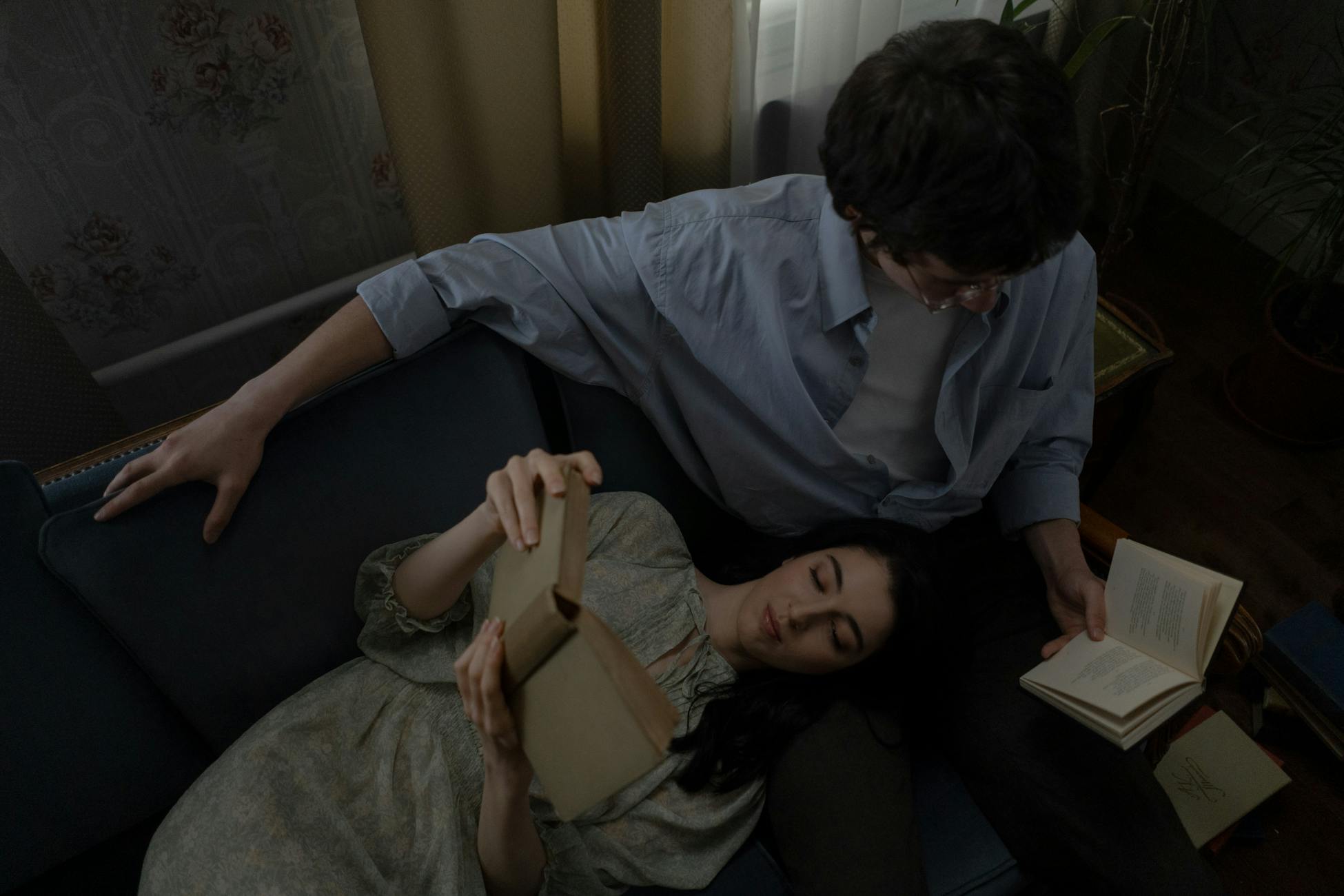
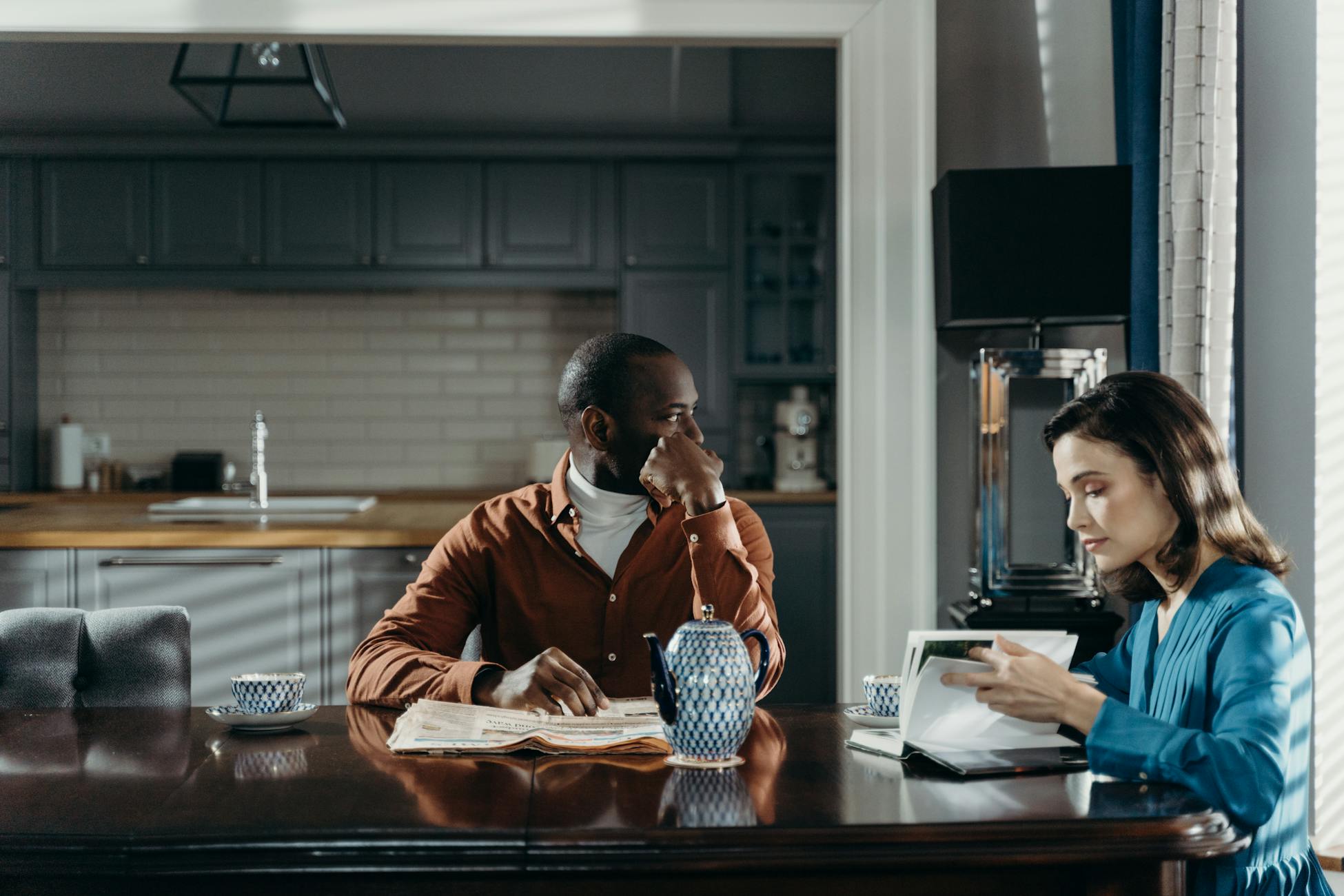
Marcus is forty-six and runs a sales team of thirty-four people, and he told me once that the first time he understood what he had married, he was sitting in the kitchen with his wife on a Sunday morning, both of them reading, and he realized fourteen minutes had passed without either of them speaking, and his shoulders had dropped about two inches without his noticing. He said it the way someone describes finding a door in a house they’ve lived in for years. His wife, Iris, is a librarian and a serious introvert, and Marcus had spent most of his adult life being told — by friends, by his mother, by the entire architecture of pop psychology — that he had married his opposite for balance. He didn’t believe it. He told me he thought everyone had the equation backwards.
Most people believe the extrovert-introvert marriage works because each partner softens the other’s edges, that the loud one teaches the quiet one to come out, and the quiet one teaches the loud one to slow down. It’s a tidy story. It is also, as far as I can tell from watching these marriages closely for years, almost entirely wrong about what the extrovert is actually getting.
What the extrovert is getting is permission for silence to mean nothing.
The hidden cost of extroversion nobody discusses
There is a thing extroverts rarely admit, partly because the culture has decided their experience is the easy one. The thing is this: for most of their lives, every silence in a room has been a question they were expected to answer. A pause in a conversation isn’t rest — it’s a vacuum that signals someone is uncomfortable, someone is angry, someone has lost interest, someone needs to be drawn back in. Extroverts have spent decades reading silence as a problem to solve. They walk into rooms and feel the temperature. They fill gaps. They keep the social weather warm. And the cost of this — the part that gets buried under the assumption that they enjoy it — is that they have almost never been allowed to experience silence as neutral.
Iris doesn’t read silence that way. To her, silence is the default state of a room. It carries no message. It is not a referendum on the relationship, not a test, not a withdrawal, not punishment. The room is quiet because nobody is saying anything, and that is fine, because rooms are allowed to be quiet. This is a worldview, not a personality trait, and it is the thing Marcus married without knowing it.
I’ve watched extroverts in long relationships with other extroverts, and what struck me is how exhausted they often look in the second decade. The narrative arc most people use — that two social people energize each other endlessly — leaves out what happens when both partners have been trained to interpret every pause as a small emergency. They keep the conversational engine running because turning it off feels like something is breaking. They mistake constant verbal contact for closeness. And then somewhere around year twelve they start describing themselves as tired in a way they can’t quite explain.
What the research actually says about complementary matches
The folk wisdom that opposites attract has been studied to death, and the picture that emerges is messier than either side of the debate wants. Research on relationship compatibility suggests that long-term satisfaction tracks more closely with similarity in core values than with complementarity in temperament — though temperament differences in areas like preferred stimulation levels can still support stable partnerships, provided each partner stops pathologizing the other’s setting.
This is the part the balance theory misses. The extrovert who marries an introvert doesn’t recover energy from her quietness the way a battery recharges. He recovers something more specific: the ability to be in a room with another person without producing anything. He gets to find out what he sounds like inside his own head when he isn’t performing connection. NPR’s examination of introvert-extrovert friendship dynamics touches on this asymmetry — extroverts often describe their introverted friends as the only people around whom they can stop hosting. Marriage to an introvert extends that relief into the structure of a life.
The nervous system learns something it was never taught
What I find most interesting about Marcus’s two-inch shoulder drop is that it took him fourteen minutes to register it. The body holds the cost of being someone who reads every silence as a question, and the body is also the part that recovers first when the cost is finally lifted. The strategies people use to manage their emotional environment can leave physiological signatures, and some regulation strategies are more costly than they appear from the outside. Constantly maintaining ambient social warmth is one of those strategies. It works. It also wears something down.
What an introverted partner offers, at the level of the nervous system, is a sustained exposure to the experience of being witnessed without being assessed. The room is quiet. The other person is present. Nothing is wrong. Repeat this thousands of times across a marriage, and the extrovert’s baseline starts to shift. He stops scanning. He stops generating filler. He learns, in his forties or fifties, the thing his introverted wife has known since she was twelve: that two people loving each other in a room does not require either of them to make noise.
This is not balance. It’s a kind of late-arriving education.
Why the balance story stuck anyway
The balance story is appealing because it flatters both partners equally and assigns each of them a teaching role. The extrovert pulls the introvert toward the world; the introvert pulls the extrovert toward stillness; they meet in the middle and call it growth. The trouble is that I have never actually seen this work in the way the story describes. The introverts I know who married extroverts did not become more extroverted. They became, if anything, more securely themselves, because someone they trusted stopped treating their natural state as a problem to be solved. And the extroverts didn’t become introverted. They didn’t develop a need for three days alone. They just lost the compulsion to fill every silence in their own home.
Pay attention to what extroverts say about their introverted partners after a decade of marriage. They almost never describe them as quiet in the negative sense. They describe them as restful. They describe coming home to them. They describe not having to be on. The vocabulary is the vocabulary of relief, not of complement.

The thing the introvert provides that nobody names
There is a particular kind of attention an introverted partner pays that I’ve come to think of as the central, unlabeled gift of these marriages. The introvert tends to listen for content rather than for tone. When the extrovert speaks, the introvert is taking in what is actually being said, not monitoring whether the conversation is going well. This means the extrovert, often for the first time in his life, gets to talk without simultaneously reading the room. He doesn’t have to manage the conversation while having it. He can just say the thing.
For someone who has spent decades being the social temperature regulator at every dinner, every meeting, every family gathering, this is not a small adjustment. It is closer to a structural change in what speech feels like. Some of the most articulate extroverts I know became more articulate, not less, after marrying introverts, because they finally stopped writing the subtitles to their own performance and started just speaking. Secure relationships are the ones where neither partner has to perform their attachment to be felt. That is the climate an introverted spouse, almost by accident, creates.
What goes wrong when the extrovert misreads the gift
The marriages I’ve watched fail in this configuration usually fail because the extrovert keeps trying to interpret the introvert’s silence after years of marriage. He treats her quietness as data — about him, about the marriage, about her mood. He asks if she’s okay. He asks if they’re okay. He fills the silences she was offering him as gifts, and he calls it intimacy work, and slowly the introvert stops bringing him into the silence at all because the silence is no longer being respected as a place.
The extroverts whose marriages thrive are the ones who, somewhere around year five or seven, finally believe their wives when they say nothing is wrong. They stop performing concern. They learn to be in a room with another adult and not require evidence that they are loved. The evidence is the room. The evidence is that she’s still in it. The evidence is that the silence between them is not asking anything of either of them.
I think about Marcus’s two inches a lot. The fact that he carried a measurable amount of physical tension into every quiet room of his life until he was forty-six, and that what released it wasn’t a vacation or a meditation app or a personality intervention — it was a woman who didn’t think the silence needed fixing, married long enough that his body finally believed her. We’ve written elsewhere about the cost of social performance in introverts, and that cost is real. But the equivalent cost in extroverts has been almost entirely invisible because we keep insisting they enjoy the work.
The extrovert who married a quiet partner is not balanced. He is, for the first time in his social life, off duty. The quiet woman across from him at the breakfast table is not his counterweight. She is the person who finally let him put the instrument down.