
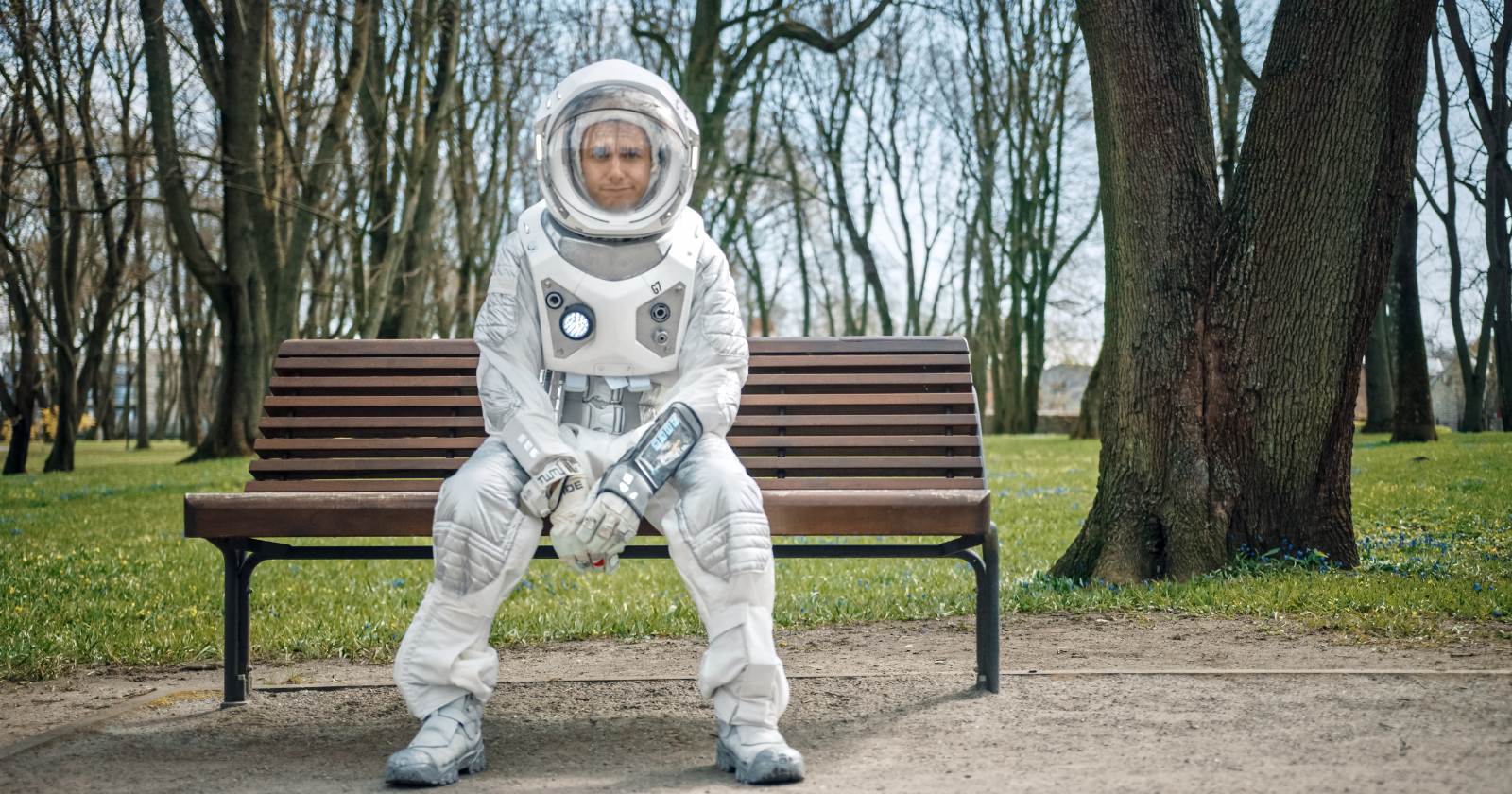
On April 28, 2001, a sixty-year-old American businessman climbed into a Russian Soyuz capsule on a launchpad in Kazakhstan and rode it into orbit . He wasn’t a trained astronaut. He wasn’t on a government mission. He had simply written a very large cheque.
His name was Dennis Tito, and twenty-five years ago today, he became the first person in history to pay his own way into space.
The price tag was a reported $20 million. The trip lasted nearly eight days, six of them aboard the International Space Station.
And while NASA objected to a private citizen flying saying he would “add a significant burden to the mission and detract from the overall safety of the international space station”, Tito went anyway.
I was around twelve when it happened. I remember it feeling like the future had cracked open just a little. Twenty-five years on, that crack has widened into something we now casually call space tourism.
Now, Tito wasn’t some bored billionaire chasing a thrill. He was a former NASA Jet Propulsion Laboratory engineer who had helped plan the Mariner 4 and 9 missions to Mars in the 1960s before pivoting to finance.
Reflecting on the experience two decades later, Tito told CNN it was the best experience of his whole life . You can read the full CNN interview here.
The names that followed
In July of 2021, Richard Branson rode his own Virgin Galactic spacecraft VSS Unity to the edge of space, beating Jeff Bezos by nine days. Bezos followed on July 20 aboard Blue Origin’s New Shepard, alongside his brother Mark and aviation pioneer Wally Funk, who at 82 became the oldest woman to fly to space at the time.
Three months later, William Shatner flew with Blue Origin at age 90, briefly becoming the oldest person ever to reach space , a record later broken in 2024 when civil rights pioneer and former Air Force test pilot Ed Dwight flew at 90 years, 253 days. NFL Hall of Famer Michael Strahan went up in December 2021. The list kept growing.
Perhaps, the strangest, most surreal moment came in April 2025, when Blue Origin launched its first all-female crew: Katy Perry, Gayle King, Lauren Sánchez (Bezos’s now-wife), film producer Kerianne Flynn, activist Amanda Nguyen, and aerospace engineer Aisha Bowe. The flight drew massive media coverage and a fair amount of public backlash.
That mission was Blue Origin’s eleventh human spaceflight, bringing its total passenger count to 58 at that point.
What comes next
The most interesting question, looking forward, isn’t whether more people will go. It’s how quickly costs will drop.
SpaceX’s Starship is being positioned to push per-passenger lunar tourism costs from $2 million , which is still absurd money but a tenth of what Tito paid. Virgin Galactic eventually wants to scale to 400 flights a year.
Will any of this trickle down to ordinary people? Honestly, probably not for another generation or more. The economics of getting humans out of Earth’s gravity well are brutal. A seat to orbit costs more than most people will earn in a lifetime.
Final words
There’s something that fascinates me about anniversaries like this one.
Twenty-five years ago, the idea that a private citizen could buy a ticket to space was so radical that NASA tried to block it. Today, it’s a sentence on the back page of a newspaper. A pop star did it. A talk show host did it. A ninety-year-old former Air Force pilot who was barred from training as an astronaut in the 1960s did it.
None of that progress feels evenly distributed.
But the underlying shift is real. One stubborn finance guy from Queens, with a forty-year-old childhood dream and a willingness to ignore the gatekeepers, dragged the realm of the possible forward for everyone behind him.
That’s worth noticing on a Tuesday afternoon in April. Whatever your version of writing the cheque is, whatever the dream you’ve been quietly carrying since you were a kid, it’s worth asking what you’d actually do if you stopped waiting for permission to chase it.
Twenty-five years isn’t that long.