
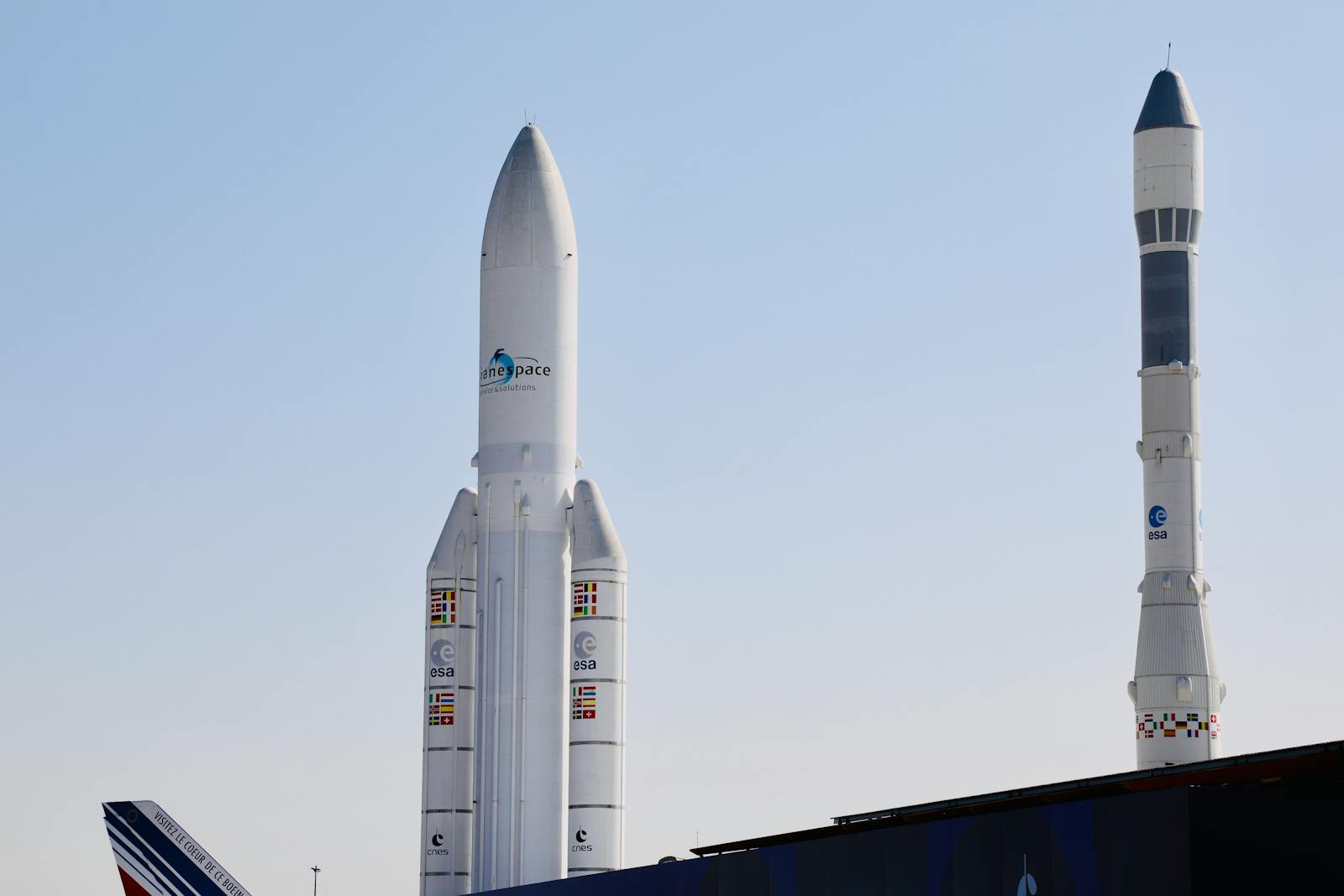
The Federal Aviation Administration will start charging commercial launch and reentry operators for the first time in its history, marking a structural shift in how the U.S. funds oversight of an industry that has outgrown its regulator.
The FAA’s Office of Commercial Space Transportation, known as AST, published its intent in the Federal Register to begin assessing fees of 25 cents per pound of payload, capped at $30,000 per mission in 2026. The fees escalate annually, reaching $1.50 per pound and a $200,000 cap by 2033, with subsequent increases tied to the Consumer Price Index.
A small line item with big implications
For any individual mission, the fee is rounding error. A typical SpaceX Starlink launch would owe several thousand dollars under the 2026 schedule. That’s a fraction of a percent of mission cost.
Aggregate the activity, though, and the math changes. SpaceX’s Starlink campaign alone could generate substantial annual revenue for the FAA at current fee levels. Total licensed launches and reentries suggest a baseline well above that figure when other operators are added in.
The fees aren’t general revenue. They are dedicated to funding FAA work on integrating launches and reentries into the national airspace system.
Why now
The fee structure arrives at a moment when AST is visibly stretched. The office’s budget decreased in fiscal year 2026 even as launch activity climbed. The FAA’s FY2027 budget proposal requests a substantial increase, with most of the new money targeted at hiring. AST staffing would grow significantly.
The FAA’s own framing is direct. Commercial space launch and re-entry demands have surged while AST’s staffing levels have remained stagnant. The office is, by its own admission, working a doubled caseload with the same headcount.
The proposed funding increases are targeted at technical expertise for license evaluations, personnel training, automation, and additional engineers and analysts.
The Starship problem hiding inside the fee schedule
The fee escalation curve matters more than the 2026 numbers suggest. By 2033, fees hit $1.50 per pound capped at $200,000. That cap is designed for a different launch industry than the one that exists today.
A fully loaded Starship lifting 100 metric tons of payload would blow through the cap on every flight. So would Blue Origin’s New Glenn at full capacity. The cap effectively becomes a flat per-mission fee for heavy-lift operators by the early 2030s, while smaller rideshare and smallsat launches continue to pay by the pound. As Starship transitions to operational service, the regulatory funding model becomes increasingly dependent on a small number of high-throughput vehicles.
That’s not necessarily a bad design, but it concentrates AST’s revenue base in a way that mirrors the concentration of the launch industry itself. SpaceX dominated 2025 activity. Whatever fee model the FAA builds will largely be a SpaceX fee model in practice.
How collection will work
Operators already submit payload weight to the FAA at least 60 days before launch under existing regulations. The FAA will use that data to calculate the fee, issue a notification, and give the operator 30 days to pay.
Operators with existing licenses are still on the hook, including for launches that have occurred since the start of the calendar year. The FAA plans to incorporate fee terms into future licenses and experimental permits as they are issued.
The licensing pipeline AST is trying to clear
The fee implementation lands just after AST completed a multi-year transition to Part 450 licensing in March 2025. Launch and reentry licenses now operate under the new framework, which permits multiple missions under a single license — a structural change that should reduce per-mission regulatory friction over time.
Minh Nguyen, the FAA’s deputy associate administrator for commercial space transportation, told the 41st Space Symposium that the agency hit a milestone last August: 1,000 cumulative operations licensed since 1989. He said the next thousand will arrive much faster, projecting that in another three to four years, the agency will reach another 1,000 launches and reentries.
That projection — matching 35 years of cumulative activity in roughly 36 months — is the operational reality driving both the fee structure and the budget request. AST cannot get there on its current staffing.
Nguyen said the office is investing in automation and process efficiency, listening to industry to identify pain points and improving processes within the office. He also pushed back some responsibility onto industry, calling for high-quality applications that take less time to review.
What this signals about commercial space regulation
The shift to user fees is philosophically significant. For decades, commercial launch oversight was treated as a public good funded entirely through general appropriations, on the theory that an emerging industry needed regulatory subsidization to grow. That premise is now obsolete. The industry is no longer emerging. It is, by launch cadence, the dominant user of certain segments of national airspace.
Charging operators directly aligns the funding model with the activity it regulates. It also creates a feedback loop where AST’s budget grows automatically with industry activity, rather than depending on annual congressional appropriations that have demonstrably failed to keep pace. Budget cuts during periods of surging launch demand illustrate the political risk of relying on appropriations alone.
The cap structure preserves some of the subsidy. Heavy-lift operators pay a fixed maximum regardless of payload, which means the per-pound effective rate falls as vehicles get bigger. Whether that’s the right policy choice depends on whether one views Starship-class vehicles as needing continued regulatory subsidy or as having graduated.
The competitive question
U.S. commercial space operators have long benefited from a regulatory environment that costs them little directly. Other launching nations charge various fees and impose various overhead costs on their operators. The new FAA fees are modest by international comparison and unlikely to shift competitive dynamics meaningfully — at least not in 2026.
By 2033, with $200,000 caps and heavy-lift vehicles flying frequently, the calculus could change. A SpaceX flying 200 Starship missions a year at the cap would pay $40 million annually in FAA fees. That’s not a competitive threat to a company at SpaceX’s scale, but it’s real money — and it represents the first time the U.S. commercial launch industry has paid directly for the regulatory infrastructure that enables its operations.
The bigger story isn’t the dollar figures. It’s that commercial spaceflight has crossed a threshold where the federal government has decided the industry should help pay for its own oversight. That’s the kind of milestone that arrives quietly, in a Federal Register notice, and only looks important in hindsight.
Photo by Léa Claisse on Pexels