
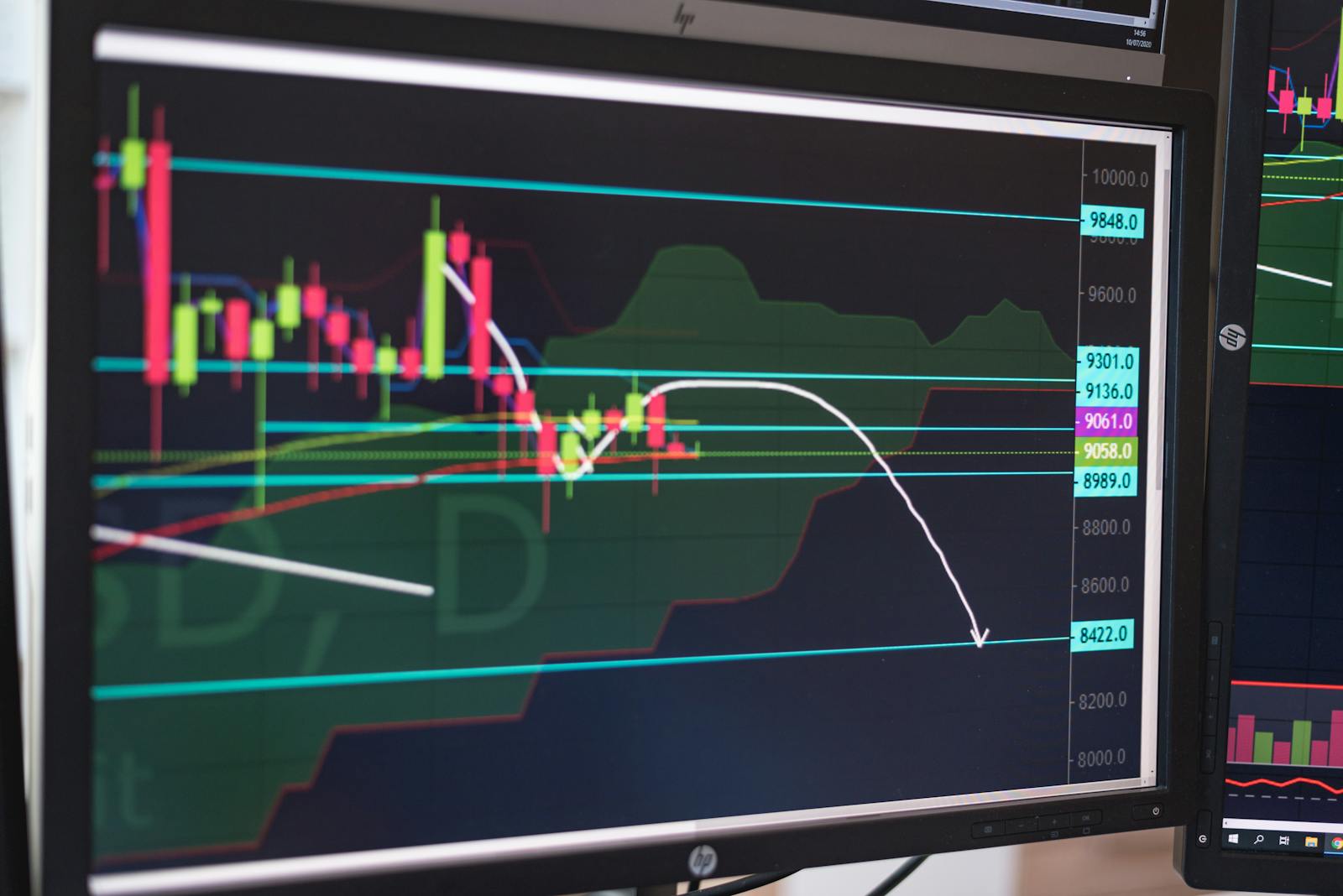
Brent crude closed Friday in the high $80s per barrel, its lowest level in recent weeks, after Iran’s foreign minister declared the Strait of Hormuz open to commercial shipping for the duration of a 10-day Israel-Lebanon ceasefire. By Saturday morning, Tehran had partially walked the statement back. The oil market’s whipsaw reaction over 24 hours exposed something more durable than any single trading session: global energy prices are now hostage to a diplomatic process that nobody fully controls — and the institutional fractures inside Iran make that process dangerously unreliable.
The significant single-day drop came after Iranian Foreign Minister Abbas Araghchi posted on X that passage through the strait would be open for the remainder of the ceasefire. Within hours, Iranian Parliament Speaker Mohammad Bagher Ghalibaf contradicted him, warning that the strait would close if the US naval blockade of Iranian ports continues. President Donald Trump, for his part, said the blockade stays in place until a peace deal is signed. The contradiction between these three positions — openness, conditional openness, and no concessions — is the story. It reveals that no single authority in Tehran can credibly guarantee safe passage, and that reality, more than any price chart, defines the current oil market.
The price signal and what it actually means
Brent spiked to a post-conflict peak in mid-March, weeks after US and Israeli strikes on Iran began in late February. The International Energy Agency described the resulting disruption as among the most severe energy supply crises in recent history. Recent price retreats still leave crude trading significantly above pre-war levels.
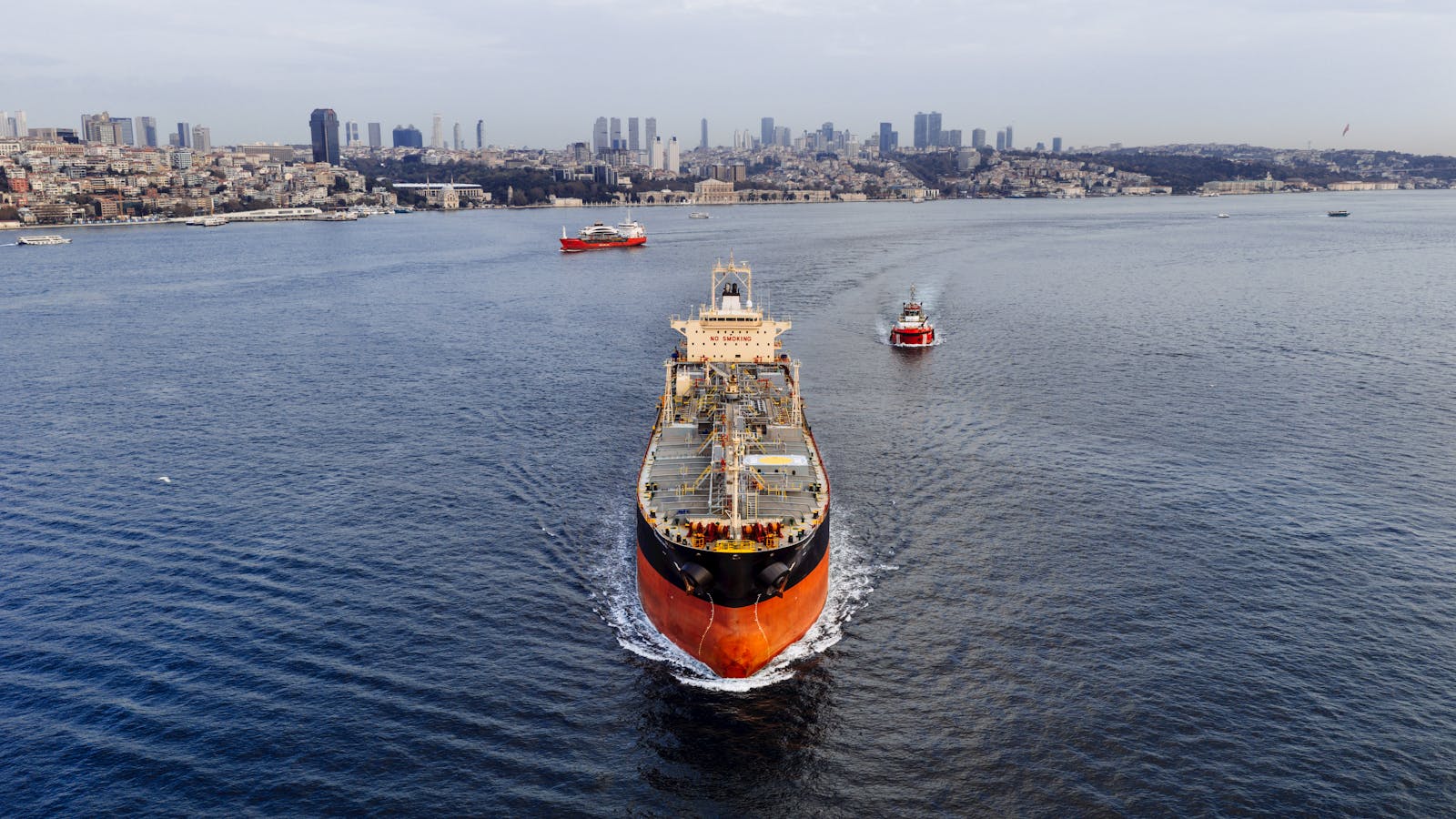
That gap is the war premium — and it persists because of Iran’s fractured decision-making, not because of any single military event. Traders are pricing in the probability that any given tanker leaving the Gulf actually makes it out. Roughly one-fifth of the world’s oil and liquefied natural gas moves through Hormuz in normal conditions. Before the crisis, significant volumes of ships made the transit daily. That figure collapsed to a trickle after Iran’s Revolutionary Guards threatened tankers and warned of mines in the waterway.
Hundreds of tankers are stuck in the Gulf, many of them carrying oil and gas. Even a partial, time-limited reopening would release a substantial volume of held-up cargo into a market that has been rationing supply for weeks. But a reopening announced by one arm of the Iranian state and immediately undermined by another is not an actionable signal — it’s noise masquerading as policy.
The ‘Tehran tollbooth’ and what reopening looks like in practice
The reopening Araghchi described is narrower than the headline suggests. Iranian state TV clarified that commercial vessels must follow a specific route set by the Islamic Revolutionary Guard Corps, and military vessels remain barred. The small number of tankers that have been permitted through in recent weeks have paid Iran significant fees for safe passage — a de facto toll on a waterway that international law designates as open.
Whether that fee applies during the ceasefire window remains unclear. So does the question of insurance. War-risk underwriters are unlikely to clear transits based solely on a foreign minister’s social media post, particularly when state-affiliated outlets inside Iran are publicly contradicting it. Tasnim News Agency, linked to the IRGC, criticized Araghchi’s announcement as inadequate — a signal that the military wing of the Iranian state does not consider itself bound by the foreign ministry’s assurances.
Ship-tracking data did show an uptick in vessel movement Saturday. But the International Maritime Organization has acknowledged that some vessels are turning off their identification transponders to avoid being targeted, making real transit volumes hard to verify. The gap between announced policy and verifiable reality is itself a measure of institutional dysfunction.
Why the institutional fracture matters more than the minister’s tweet
Araghchi’s statement and Ghalibaf’s rebuttal are not just a diplomatic miscue. They reflect a genuine split inside the Iranian state between the foreign ministry, which is trying to create conditions for a US deal, and the IRGC and parliamentary hardliners, who view the strait as leverage that shouldn’t be surrendered while American warships are still parked off Iranian ports.
This is the core problem the oil market is trying to price. Maritime security analysts have indicated that the announcement changes little given that the implicit threat of mines remains. Industry observers have described the outlook for shipping over the coming weeks as bleak. Neither assessment is surprising when the entity controlling the waterway’s physical security — the IRGC — is publicly distancing itself from the entity making promises about access.
Insurance markets, tanker owners, and refiners make decisions based on enforceability, not announcements. A unilateral Iranian declaration that can be revoked by the IRGC within a news cycle is not a reopening. It’s a signal of intent, priced by traders as somewhere between a ceasefire dividend and a head fake. Until Iran’s internal power structure produces a unified position — backed by the IRGC, not just the foreign ministry — the war premium stays embedded in every barrel.
The multinational response
UK Prime Minister Keir Starmer said Friday that Britain and France would lead a multinational mission to protect commercial shipping routes through Hormuz. Starmer emphasized the mission would be peaceful and defensive in nature and would only deploy once fighting ends.
The conditional framing is revealing — and it deepens the institutional problem rather than solving it. European governments are willing to underwrite freedom of navigation with naval assets, but not while live hostilities continue. That creates a chicken-and-egg dynamic: shipping needs security guarantees to resume, security guarantees require a ceasefire to hold, and the ceasefire depends partly on whether oil flows can stabilize the diplomatic track. At every link in that chain, the question is the same: which institution has the authority to make a binding commitment? So far, the answer is none of them.
The ceasefire deadline reshapes the trade
The Israel-Lebanon ceasefire carries a late-April expiration. The US-Iran ceasefire expires around the same time. Trump said talks would continue over the weekend and that the two sides were not far apart, though a separate dispute over Iran’s enriched uranium stockpile remains unresolved. Iran’s foreign ministry denied Trump’s claim that Tehran had agreed to transfer the uranium to the US — yet another instance of public contradiction undermining market confidence.
For the oil market, the next several days are the trade. If talks produce a framework — one endorsed by the IRGC as well as the foreign ministry — Brent likely retraces further toward pre-war levels as the war premium unwinds. If the deadline passes without agreement, or if agreement is reached but immediately contradicted by Iranian hardliners, the strait closes again, tankers scatter, and recent price peaks become a floor rather than a ceiling.
The broader pattern
What’s visible in this week’s price action is the degree to which a handful of nodes in the global energy system can swing the world economy. Hormuz is one. The Suez Canal is another. Venezuela’s collapsing refining capacity is a third. Each represents a single point of failure where institutional dysfunction, geopolitical leverage, or physical infrastructure collapse can reprice energy globally within hours.
The policy implication that Western governments keep arriving at, and keep failing to fund at scale, is diversification: more pipelines bypassing chokepoints, more LNG terminals, more strategic reserve capacity. The current Hormuz crisis follows a pattern set by previous Gulf shipping disruptions. Each one produces the same analyst consensus, the same congressional hearings, and the same eventual return to dependence on the waterway.
Friday’s price drop doesn’t resolve that dependence. It just reminds the market that the price of relying on a chokepoint controlled by a state that cannot agree with itself is volatility without end — until either the institutional fractures inside Tehran are resolved, or the world finally builds the infrastructure to route around them.
Photo by AlphaTradeZone on Pexels