
India assumed the chairmanship of a BRICS bloc that has expanded its membership and shrunk in purpose — and that contradiction is India’s problem now. New Delhi inherits the job of leading an organization whose members cannot agree on what it is, and India’s own foreign policy depends on never answering that question. The country that has built its post-Cold War identity around avoiding blocs now chairs one whose loudest members want it to become exactly the kind of bloc India refuses to join. That impossible position — leading an institution whose success would undermine the leader’s own strategy — is the defining tension of BRICS in 2026, and it reveals something important about why emerging-economy multilateralism keeps failing.
Prime Minister Narendra Modi has promised a rebranding. Speaking at a recent BRICS Summit, he said India would give a “new form” to the grouping during its presidency, with proposals to recast the acronym around themes of resilience, innovation, cooperation and sustainability. Whether that rhetorical flourish translates into anything the other members will sign is the open question of 2026. But the rebranding itself is diagnostic. You rebrand when the original brand has become a liability.

A bloc built on a growth forecast, not a shared purpose
BRICS began as an investment thesis before it became a diplomatic club. Jim O’Neill of Goldman Sachs coined the term in the early 2000s in a research paper identifying Brazil, Russia, India and China as emerging economies likely to reshape global growth. The four countries began meeting informally in the mid-2000s, formalized the grouping around 2009, and added South Africa in 2010. The original sin was right there at the founding: countries that share a growth trajectory can still have incompatible views on almost everything else.
By the mid-2020s, the roster had expanded significantly. Iran, the United Arab Emirates, Egypt, and Ethiopia joined as new members. The Council on Foreign Relations notes that expansion has deepened the divisions among members old and new over how to set the stage for a revised world order. Each new member brought its own agenda, its own adversaries, and its own expectations for what the bloc should do — making the chair’s job less like leadership and more like hostage negotiation.
O’Neill himself has expressed skepticism about the project. Writing for Project Syndicate, he has argued that the bloc’s performance has been disappointing and that the countries have proven incapable of uniting as a meaningful global force. The expansion since has not changed this assessment. If anything, it has complicated it. The man who named the group would not invest in it.
Iran: the contradiction India cannot chair away
Nothing has exposed India’s impossible position more cleanly than the Iran question. BRICS includes Iran as a full member. It also includes India, which maintains close defense and intelligence ties with Israel, a strategic partnership with Washington, and a long-running energy relationship with Tehran. For a country whose foreign policy depends on keeping all of these relationships in separate rooms, chairing a bloc that puts them around the same table is structurally hazardous.
That balancing act is not theoretical. India has navigated these competing relationships through bilateral diplomacy rather than bloc coordination. Iran has expressed interest in India’s chairmanship as an opportunity for dialogue and regional stability, according to statements from Iranian officials. The subtext is hard to miss. Tehran would like the chair to defend its interests. New Delhi would prefer not to.
The tension has played out in military exercises as well. South Africa has hosted naval drills involving BRICS members, and these events have become case studies in how the grouping fractures under pressure. Reports indicate tensions over which members participate and under what political circumstances. India’s approach has been cautious. According to official statements, India has clarified that such exercises are national initiatives rather than institutionalized BRICS activities — a distinction that effectively says the bloc’s chair does not consider joint military action to be part of the bloc’s mandate. That is not leadership. It is a country drawing boundaries around its own chairmanship.
What BRICS has actually accomplished — and what that tells us
The ledger is short, and it explains why India’s position is so constrained. The New Development Bank, headquartered in Shanghai, has funded infrastructure projects across member states and represents the group’s one durable institutional output. Beyond that, the record is rhetorical. Proposals for a common BRICS currency have not produced a currency. Calls for a unified position on permanent UN Security Council seats have not produced a unified position. Coordinated responses to Western sanctions have been individual, not collective.
In 2022, India distanced itself from efforts to rally BRICS support for Russia over Ukraine, resulting in a watered-down joint statement. The pattern has repeated on Gaza, on tariffs, on sanctions regimes. The members who want BRICS to be an anti-Western pole push one direction. The members who want it to be a reform platform for existing institutions push another. The statements split the difference and commit to nothing. This is the institutional machinery India has inherited: a consensus engine that runs on ambiguity.
Space Daily has covered the bloc’s internal contradictions repeatedly, from Xi Jinping’s calls to resist protectionism to the group’s denunciations of Trump-era tariffs. The speeches are consistent. The follow-through is not.
The chair that cannot lead
India’s position is unusual among BRICS members, and unusually poorly suited to the chairmanship. It is the only member not currently locked in an adversarial economic relationship with the United States on ideological grounds, even as it faces significant trade tensions with Washington. It has a functioning democracy, which Russia and Iran do not. It has a border dispute with China that periodically turns deadly. It has a growing defense relationship with Israel and a growing energy relationship with Iran. It has bought Russian oil through every Western sanctions regime.
These are not the attributes of a bloc leader. They are the attributes of a country that has organized its foreign policy around avoiding bloc membership. The Indian strategic establishment has a term for this posture: multi-alignment. Applied to BRICS, it means India chairs the organization by not doing very much with it.
That may be the most honest approach available. The alternative — pushing the bloc toward the anti-Western pole that Beijing and Moscow prefer — would force India to choose between BRICS and its relationships with Washington, Jerusalem, and the Gulf. Modi has framed India’s approach in aspirational terms, emphasizing humanitarian concerns and avoiding choices between BRICS and Western relationships. The new acronym proposals are designed to avoid that choice. They reframe the bloc as something safely aspirational. The UAE’s relationship with Israel is warmer than Iran’s relationship with oxygen, and yet they sit in the same grouping. Aspirational language is the only adhesive that holds.
What India’s chairmanship actually reveals
BRICS is a useful object of study for anyone interested in how international institutions fail slowly. The group was built on a demographic and economic observation — that a handful of large emerging economies would shape the 21st century — rather than on shared values, shared interests, or shared threats. Growth rates are not a foundation for foreign policy coordination. The expansion of membership has made this worse. Egypt and Ethiopia have strategic interests that diverge sharply from Brazil’s. Multiple members are not eager to be read as part of a China-led anti-Western coalition. And the country now in the chair has the most to lose from the bloc becoming one.
What India’s chairmanship will most likely produce is a more modest BRICS — less ambitious in its rhetoric, more focused on development finance and sustainability projects that the New Development Bank can actually deliver. That would be a retreat from the original promise. It would also be the first honest accounting the bloc has done of what it is and is not capable of.
But here is what India’s year in the chair really demonstrates, and it is a lesson that extends well beyond BRICS: multilateral institutions built on economic category rather than strategic alignment do not evolve into power blocs. They evolve into talking shops, and then into obligations that their most capable members manage rather than lead. India is not failing as BRICS chair. It is performing the role exactly as the institution’s design permits. The bloc that cannot decide what it wants to be has handed the gavel to the country least willing to decide for it. That is not a leadership crisis. It is the logical endpoint of an organization that was never built to be led.
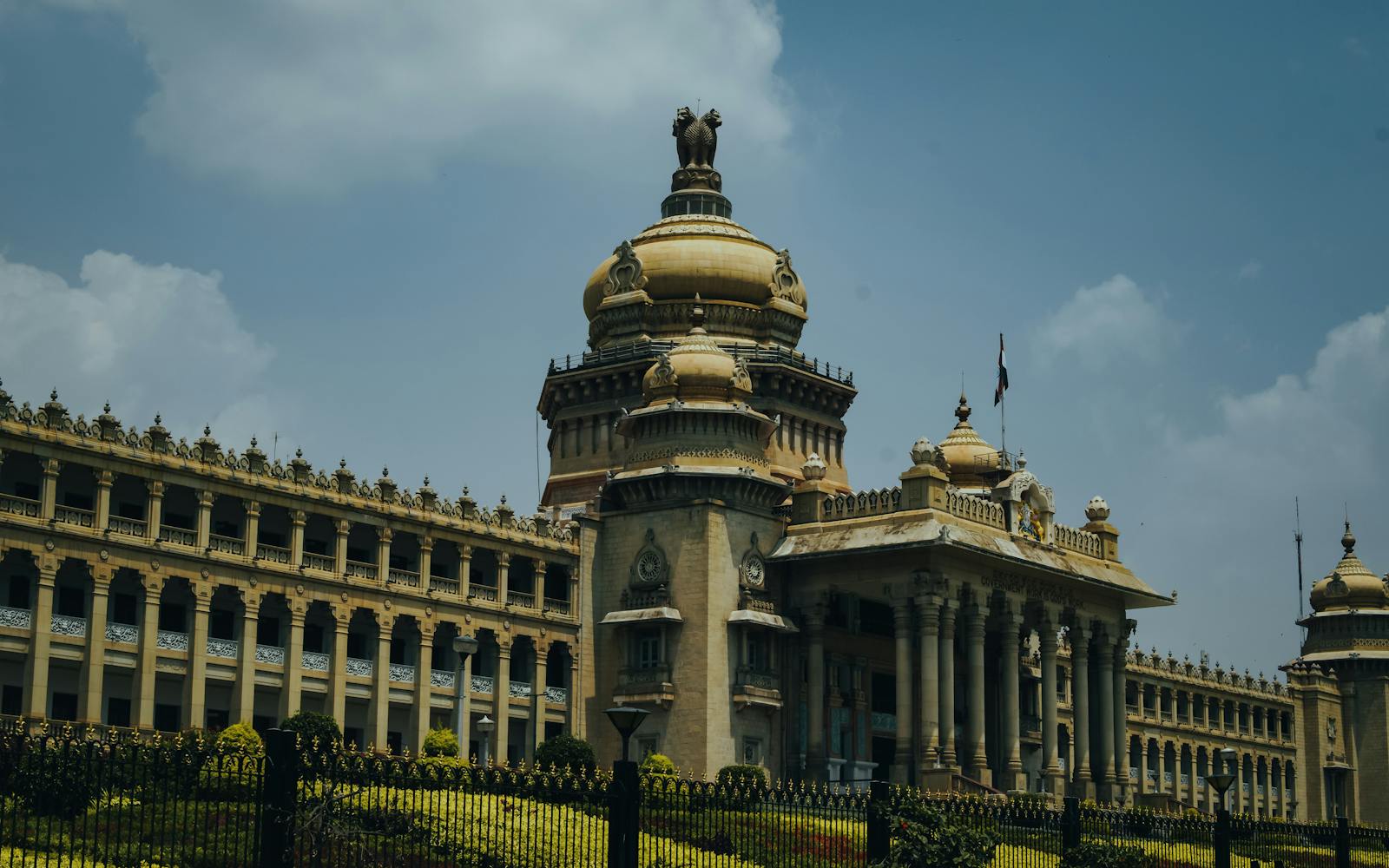
Photo by Akhil Dasari on Pexels