
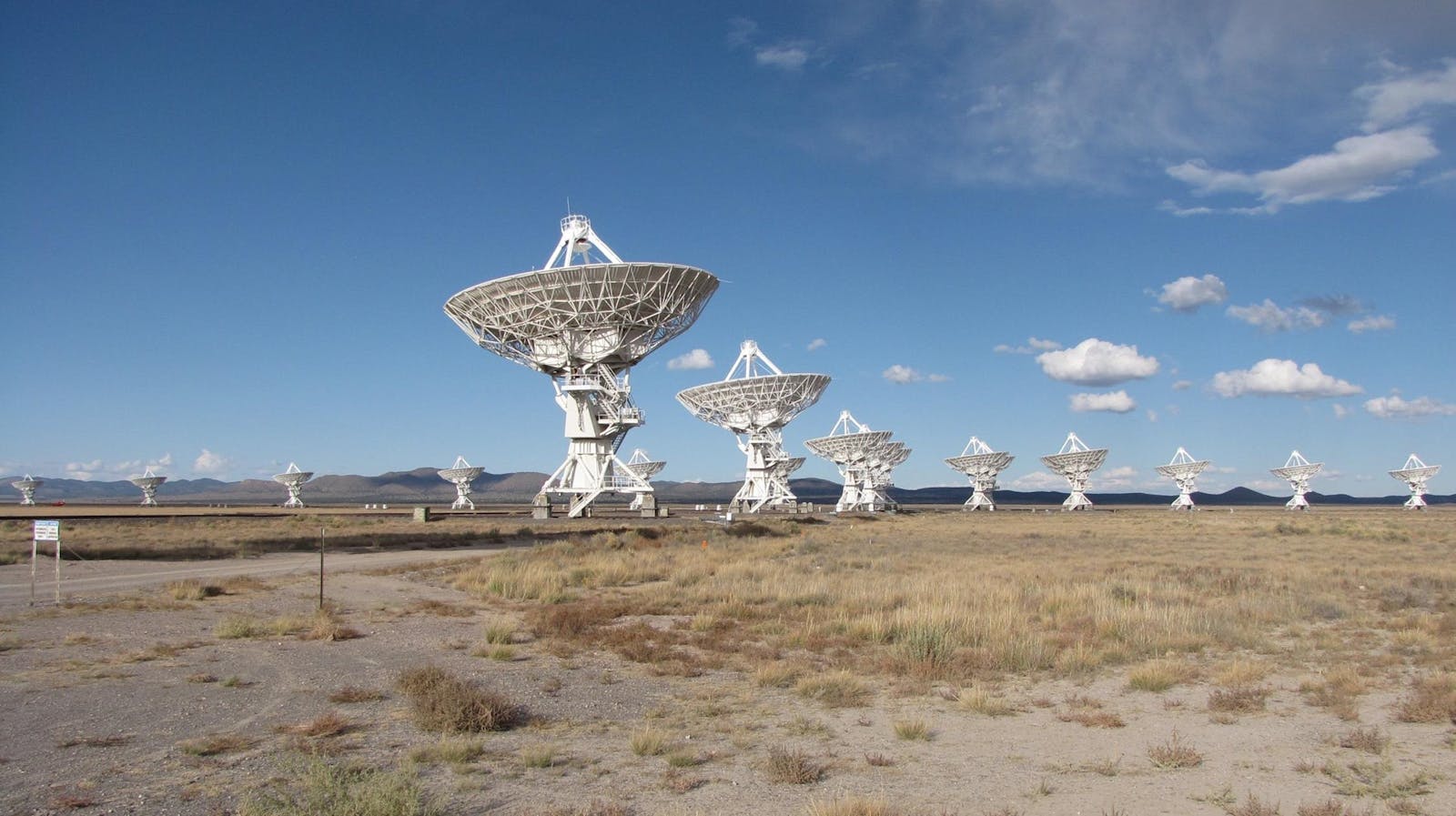
There’s a piece of Cold War infrastructure in the Mojave Desert that has been silent since September 16, 2025, and almost no one outside a small circle of deep space mission planners has noticed. The 230-foot dish at Goldstone known as DSS-14, large enough to shelter a Boeing 747 under its curve, over-rotated during routine operations, tore cabling and plumbing at its center, flooded itself when fire-suppression hoses ruptured, and went dark. Seven months later, there is still no firm date for its return to service. The silence is the story. Because when the largest antenna in the Western Hemisphere capable of whispering to Voyager goes offline for seven months and the public response is essentially nothing, you’re looking at a piece of infrastructure that has been quietly running on borrowed time for decades.
The Deep Space Network is the most important space system most people have never heard of. Every image from Perseverance, every data packet from Europa Clipper, every status check on the two Voyagers drifting in interstellar space — all of it flows through three complexes of giant dishes on three continents. Without the DSN, there is no interplanetary exploration. Full stop.
Three dishes, 120 degrees apart, and a rotating planet
The geometry of the Deep Space Network is almost embarrassingly elegant. Three communication complexes, spaced roughly 120 degrees apart around the globe: Goldstone in California’s Mojave Desert, Madrid in Spain, and Canberra in Australia. As Earth rotates, at least one site is always in view of any given deep space target. Hand off, hand off, hand off — a 24-hour relay race that has been running since 1963.
Each complex hosts multiple antennas of varying sizes. The workhorses are the 34-meter beam waveguide dishes. The crown jewels are the 70-meter giants — one at each site. Goldstone’s is DSS-14. Madrid’s is DSS-63. Canberra’s is DSS-43. These three 70-meter dishes are the only antennas on Earth sensitive enough to command certain legacy spacecraft at extreme distances. Voyager 2, for instance, can only receive uplink commands from Canberra’s DSS-43, because it’s the only 70-meter dish in the Southern Hemisphere and Voyager 2’s trajectory keeps it below the northern horizon.
That’s the part people don’t appreciate. These aren’t redundant assets. For the hardest jobs, each 70-meter dish is effectively a single point of failure for an entire hemisphere. When DSS-14 went down in September, NASA didn’t just lose a dish. It lost the primary high-sensitivity link to spacecraft in a roughly one-third slice of the sky.
The Mars Antenna and what it actually does
DSS-14 is nicknamed the Mars Antenna because it received its first signal from Mariner 4 in 1966 — the first successful flyby of Mars. In 1988 it was upgraded from 64 meters to 70 meters specifically so it could handle Voyager 2’s encounter with Neptune. When Voyager 1 crossed into interstellar space in 2012, DSS-14 was part of the team listening. The dish’s history is essentially the history of American planetary exploration.
Beyond downlink, the Mars Antenna does something few other instruments can: planetary radar. By bouncing signals off near-Earth asteroids, it helps characterize their size, shape, and trajectory. Losing that capability during a period of intensified interest in planetary defense is not a small thing. Arecibo is gone. Goldstone’s radar, when DSS-14 is operational, is one of the few remaining assets capable of high-resolution asteroid characterization. With DSS-14 offline, that work largely stops.
A network already operating at 140 percent
Here is the number that should concentrate minds. The Deep Space Network has been running over capacity for years. A 2023 NASA Office of Inspector General report found that demand on DSN antennas exceeds supply by as much as 40 percent at peak times. That’s not a warning about the future. That’s a description of the present. Mission planners are already being told they can’t have the contact hours they need. Missions negotiate, compromise, trade slots.
And demand is climbing fast. The OIG report projected demand would exceed capacity by 50 percent by the 2030s, driven largely by Artemis. Artemis I alone required 903 hours of DSN time, with its secondary cubesat payloads consuming another 871 hours, according to figures cited in the OIG audit. That’s one mission. Now add Artemis II, Europa Clipper in cruise, Psyche, Mars Sample Return architecture, commercial lunar landers piling onto the manifest, and a growing set of international missions that rely on DSN under reciprocal agreements.
This is the part of the story that has been ignored for a decade. The DSN isn’t running out of capacity. It ran out of capacity. Everything happening now is triage.
The Artemis II question
NASA’s public line on Artemis II is reassuring. DSS-14 was never part of the mission plan, a JPL spokesperson told Mashable in a statement about the crewed mission’s communications readiness. Goldstone’s 34-meter dishes and the Madrid and Canberra complexes will carry the traffic. The system, the agency says, is ready.
That may be technically true. It is also beside the point. The reason a four-hour blackout during Artemis I matters isn’t that it repeated during Artemis II. It’s that the root causes — aging hard drives, outdated software, alarm systems that didn’t alarm — were the mundane failures of infrastructure that has been patched instead of replaced. Since Artemis I, according to a 2024 OIG readiness audit, two similar failures have occurred at Canberra and Goldstone, requiring the replacement of three additional hard drives. The auditor concluded that communication disruptions during Artemis II are increasingly likely.
NASA’s mitigation is partnership. New agreements with JAXA and expanded cooperation with ESA provide backup coverage. That’s smart. It’s also an admission. If your primary network is reliable, you don’t need backup coverage from foreign partners for a crewed lunar mission. You build backup coverage when you have genuine doubt about whether your primary system will hold.
Why this infrastructure decayed without anyone noticing
The Deep Space Network suffers from the same problem as every piece of unglamorous infrastructure: it works, until it doesn’t, and nobody funds maintenance of something that works. The dishes were built in the 1960s and 1970s. DSS-43 at Canberra underwent 11 months of major upgrades from 2020 to 2021. Madrid lost telemetry for months in 2006 and 2007 after heavy rains. In 2014, a welder dropped a handrail onto DSS-14 and punched a hole through the dish. In 1992, an earthquake wrecked it.
These aren’t exotic failures. They’re the ordinary wear of industrial equipment that has been operating for five and six decades. The difference is that most industrial equipment can be taken offline for a year without consequences. The DSN cannot. Every hour a 70-meter dish is down is an hour that some Mars orbiter is banking data it can’t downlink, some outer planets mission is operating blind, some asteroid isn’t being tracked.

What the DSN makes possible — and what we stand to lose
NASA is not sitting still. The Deep Space Network Aperture Enhancement Program is adding six new 34-meter dishes across the three complexes, and optical communications experiments like the one on Psyche have demonstrated dramatically higher data rates from interplanetary distances. But six 34-meter dishes cannot replace the unique capabilities of the 70-meter giants for the deepest, faintest signals, and optical terminals don’t help the 40-plus active missions that will live and die on radio. There is no program in place to build a new 70-meter dish. No such project has been greenlit.
To appreciate what’s at stake, consider what the DSN has already enabled. Space Daily’s earlier look at the Cassini-Huygens mission’s rewriting of habitable world science is a DSN story as much as it is a spacecraft story. Every image of Enceladus’s plumes, every radar pass over Titan’s hydrocarbon lakes, every gravity measurement that revealed subsurface oceans — all of it came through these three complexes. Cassini spent 13 years at Saturn. For 13 years, a handful of dishes on Earth were its only lifeline.
The Voyagers are still talking to us after 48 years. They are the farthest human-made objects in existence. The only reason we still have contact is that the DSN’s 70-meter dishes can detect signals measured in billionths of a billionth of a watt. When DSS-43 in Canberra went down for upgrades in 2020, NASA could not send commands to Voyager 2 for 11 months. The spacecraft operated autonomously, executing its last uploaded instructions, waiting. That’s the reality of deep space: the margin between contact and silence is a single dish on a single continent.
The decision that isn’t being made
The uncomfortable truth about the DSN is that everyone knows what needs to happen, and no one is making it happen at the required scale. The inspector general has said so repeatedly. Mission planners have said so. JPL engineers have said so. The Aperture Enhancement Program is real but modest. A serious recapitalization of the 70-meter class would require Congressional appropriations at a scale that hasn’t been seriously proposed.
Part of the problem is visibility. DSN failures don’t kill anyone. Cassini didn’t crash because of a missed contact. Perseverance isn’t going to die because its downlink window got shortened. The costs of network degradation show up as slower science returns, deferred missions, degraded planetary defense capability, and heightened risk during crewed operations — all real, all diffuse, none of them producing the kind of single dramatic event that forces a funding response.
Until Artemis II. A crewed mission changes the political calculus. A four-hour blackout during an uncrewed test flight is a near-miss anecdote. A four-hour blackout with astronauts aboard Orion is a catastrophe in waiting. Whether that risk materializes or not, the possibility is now in the room in a way it wasn’t before.
Seven months into its silence, DSS-14 sits in the Mojave, its 230-foot dish pointed at nothing. NASA’s mishap investigation board has said little publicly. If the damage is structural — if the over-rotation compromised the dish’s bearing or superstructure — the timeline and cost of repairs could be substantial. A dish that broke in 1992 from an earthquake and in 2014 from a dropped handrail has now broken a third time in a more serious way. At some point, repair becomes replace, and replacement is a multi-year capital project that hasn’t been budgeted. The Deep Space Network is the circulatory system of interplanetary exploration. It has been undersized for the mission it’s being asked to perform for at least a decade. A broken 230-foot dish in the Mojave is not the problem. It’s the symptom. The problem is that we built a system in 1963 to talk to a handful of robotic spacecraft and have been asking it to carry the weight of a spacefaring civilization ever since. It has held up remarkably well. It won’t hold up forever.
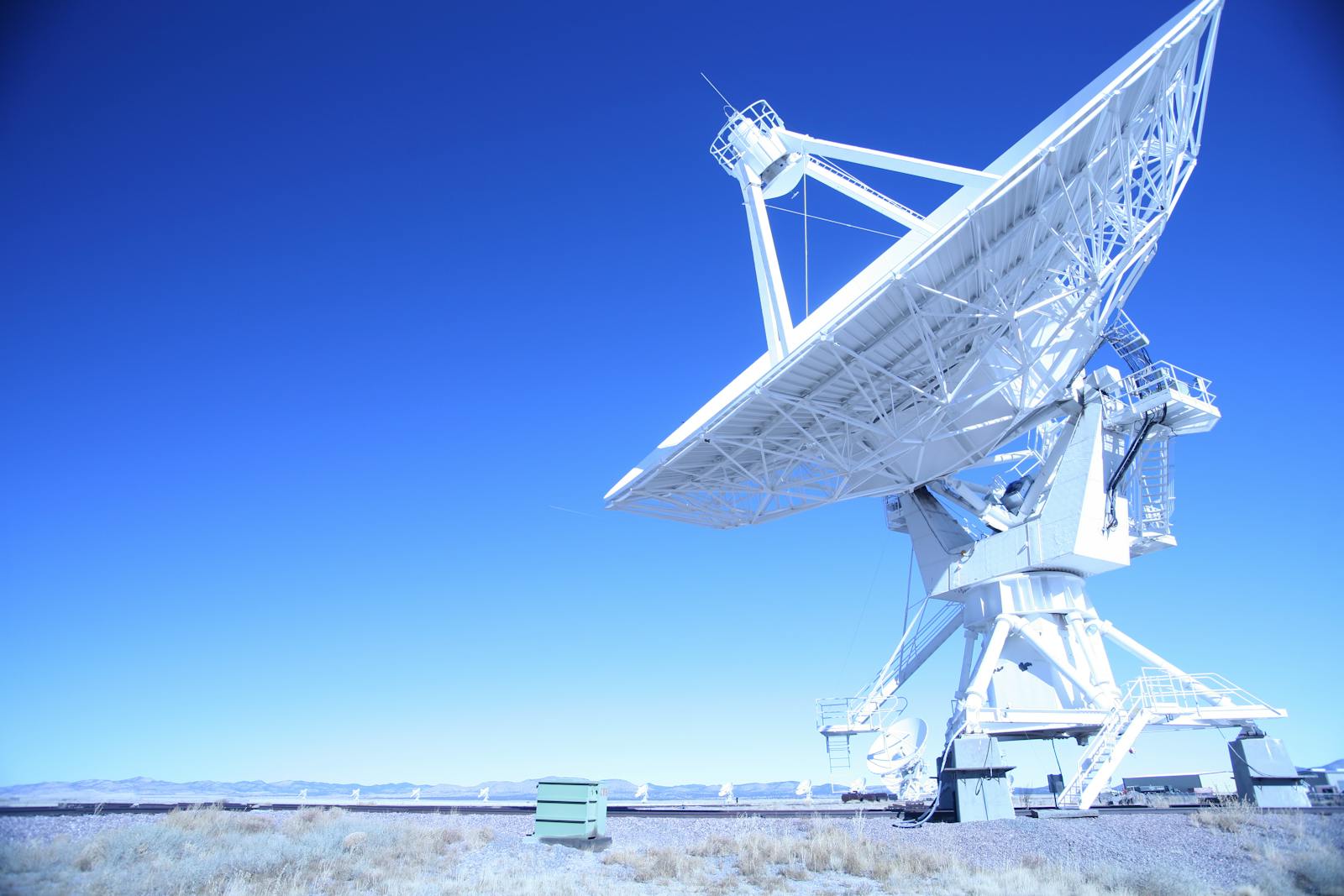
Photo by Greg Goebel on Pexels