

Chinese President Xi Jinping reportedly met Russian Foreign Minister Sergey Lavrov in Beijing in mid-April and declared that the stability of China-Russia relations is “precious” — a word that, in the context of a global energy crisis triggered by the effective closure of the Strait of Hormuz, amounts to a strategic confession. Beijing is not merely maintaining its relationship with Moscow. It is being pulled into dependence on it, and the Hormuz crisis has made that gravitational pull functionally irreversible.
The meeting, reported by Al Jazeera citing China’s Xinhua news agency, saw Xi press for closer strategic coordination between Beijing and Moscow. Lavrov, speaking at a news conference afterward, said Moscow could compensate for China’s energy shortages as shipping through the strait remains choked. The offer was framed as generosity. It is better understood as leverage.
The Crisis That Broke Beijing’s Balancing Act
For years, China managed its energy dependence through diversification. It bought oil from Saudi Arabia, Iran, Russia, Angola, and others, ensuring no single supplier could hold it hostage. The Strait of Hormuz was the linchpin of that strategy — the passage through which roughly 20 percent of the world’s oil and gas supply previously moved, including much of what China imported from the Gulf.
That linchpin is now broken. Reports indicate the United States and Israel launched strikes against Iran in late February. Tehran retaliated not with equivalent firepower but with geography: it effectively closed the strait to most maritime traffic. Brent crude, which sat at around $70 a barrel before the war, has surged past $100 during the conflict. The world’s largest importer of crude oil has seen its supply diversification strategy collapse in six weeks.
Former US Special Envoy David Satterfield told the BBC that the strait carries not just oil but roughly 30 percent of the world’s aluminium, up to 50 percent of feedstocks for fertilizers, and about 17 percent of all polymers — disruptions that compound China’s energy crisis with food security and industrial supply chain crises, according to the BBC.
This is the context that makes the Xi-Lavrov meeting so consequential. Beijing is not choosing Russia out of ideological affinity. It is choosing Russia because geography has left it with few alternatives.
Russia Steps Into the Gap — On Its Terms
Lavrov’s offer to compensate for China’s energy shortfall is the most concrete signal yet that Moscow sees the Hormuz crisis as a strategic opening. Russia, already China’s major overland energy supplier through pipelines like the Power of Siberia, can increase flows without relying on contested sea lanes. The infrastructure exists. The political will exists. What has changed is China’s bargaining position.
The two nations formalized their closeness in 2022 when Xi and President Vladimir Putin signed a strategic partnership described as having “no limits,” just weeks before Russia invaded Ukraine. That partnership was, at the time, a statement of geopolitical alignment between two roughly equal powers. The Hormuz crisis is transforming it into something more asymmetric. Russia exports energy. China desperately needs it. The strait’s closure has converted what was a preference into a lifeline — and lifelines come with strings attached.
According to Xinhua, Xi urged the two countries to defend their interests and strengthen cooperation with Global South nations. The framing is deliberate. Beijing and Moscow have both worked to position themselves as champions of a multipolar order, and the Middle East crisis gives that narrative new urgency. But beneath the rhetoric of equal partnership, the structural reality is shifting. A China that depends on Russian pipelines for energy security is a China that will find it progressively harder to maintain distance from Moscow’s other priorities — including Ukraine.
Trump’s Blockade Tightens the Vise
The meeting between Xi and Lavrov comes amid reports that President Trump ordered a naval blockade of Iranian ports, a move that has further constrained Beijing’s options. Since March, tens of millions of barrels of oil have left Iran’s main export terminal at Kharg Island, with the vast majority directed toward China. Washington had been allowing these exports to ease global supply pressures. A tighter blockade threatens to cut off one of Beijing’s last remaining alternatives to Russian supply.
Energy analysts have suggested to the BBC that Trump’s blockade may be designed to pressure Beijing into playing a more active role in mediating a ceasefire and reopening trade flows through the strait. If that is the calculation, the Xi-Lavrov meeting offers a clear answer: China would rather deepen its dependence on Moscow than serve as a broker for an American-led resolution.
Chinese foreign ministry officials have stated that the Strait of Hormuz is an important international trade route and that maintaining its security is in the common interest of the international community. The language is diplomatic. The actions point in a single direction. Beijing is locking down alternative supply lines, and those lines run through Russia.
This is the strategic trap the Hormuz crisis has created for China. Every option available to Beijing — accepting Russian energy dependence, negotiating under American pressure, or watching its economy absorb sustained energy shocks — diminishes its strategic autonomy. And of the three, the Russian option is the one that offers immediate relief, which is precisely why it is the most dangerous in the long term.
From Alignment to Orbit
China and Russia remain careful about the formal architecture of their relationship. They are not military allies. They have no mutual defense treaty. Their 2022 partnership agreement was expansive in rhetoric but deliberately vague on obligations. Beijing has consistently avoided directly supporting Russia’s war in Ukraine, even as it has maintained economic ties that Western capitals view as enabling Moscow.
But the Hormuz crisis is eroding China’s ability to maintain that careful distance. Russia’s capacity to supply energy overland gives China a hedge against maritime disruptions — but only if the relationship remains warm. Every week the strait stays closed, the cost of displeasing Moscow rises. This is not alliance formation. It is gravitational capture: a slow, structural process in which one power’s dependence on another reshapes the orbit of their entire relationship.
Xi’s characterization of the relationship as “precious,” reportedly referencing global instability, carries strategic significance. The word signals emotional warmth for a domestic and international audience. But it also signals something Xi would never say explicitly: necessity. In a world where the most important shipping lane for energy can be closed in a matter of days, a friendly neighbor with oil pipelines already built is not just a diplomatic partner. It is an insurance policy — and the premiums are paid in strategic deference.
The meeting between Xi and Lavrov also connects to Beijing’s broader diplomatic offensive in the region, which has included outreach to Pyongyang and other capitals as China works to secure its strategic position. And it sits alongside ongoing tensions over Ukraine, where Kyiv continues to push back against any peace terms that would reward territorial seizure — terms that Beijing will find it harder to oppose if its energy security depends on Moscow’s goodwill.
What Comes Next
The immediate question is whether the Hormuz blockade situation deteriorates or stabilizes. A two-week conditional ceasefire between the US and Iran collapsed over the weekend, and the US military’s naval blockade of Iranian ports is still in its earliest phase. Allies have been reluctant to participate. British Prime Minister Keir Starmer said London would not support it. Australia said it was not asked. Spain’s defense minister called it senseless.
Dana Stroul, a former senior Pentagon official now at the Washington Institute for Near East Policy, has noted that unilateral military operations in the strait face significant sustainability challenges.
For Xi and Lavrov, the disorder is not just a problem to manage. It is a condition that accelerates China’s reorientation toward Russia. Every week the strait remains closed, the case for overland energy routes from Russia to China grows stronger. Every failed negotiation between Washington and Tehran reinforces Beijing’s argument that American-led security structures create instability rather than contain it — and deepens the logic of turning to Moscow instead.
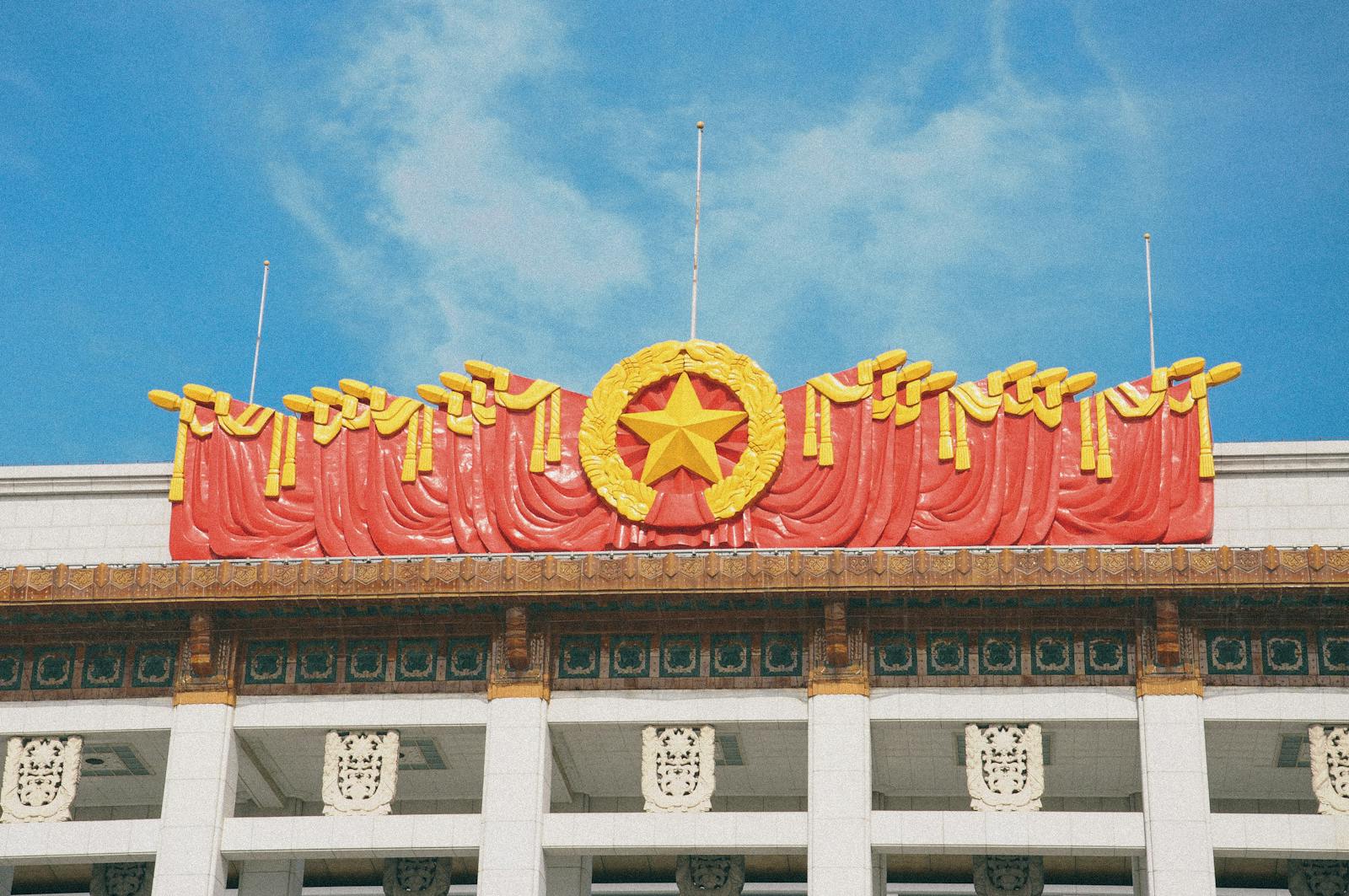
Here is the assessment I believe the evidence supports: the Hormuz crisis has set in motion a structural realignment that will outlast the crisis itself. Even if the strait reopens tomorrow, Beijing has now internalized the lesson that maritime energy routes are a strategic vulnerability that only Russia can reliably hedge. The pipelines will expand. The contracts will lengthen. The diplomatic deference will deepen. China is not becoming a Russian client state — its economy is too large and its ambitions too independent for that. But it is entering an orbit from which escape velocity will be extraordinarily difficult to achieve. The post-Hormuz world will not feature a China-Russia alliance. It will feature something more consequential: a China that cannot afford to say no to Moscow when it matters most.
Photo by Christian Reinke on Pexels